The Fall of the Soviet Union Reshaped World Order by Ending a Superpower, Redrawing States, and Reopening Global Strategy
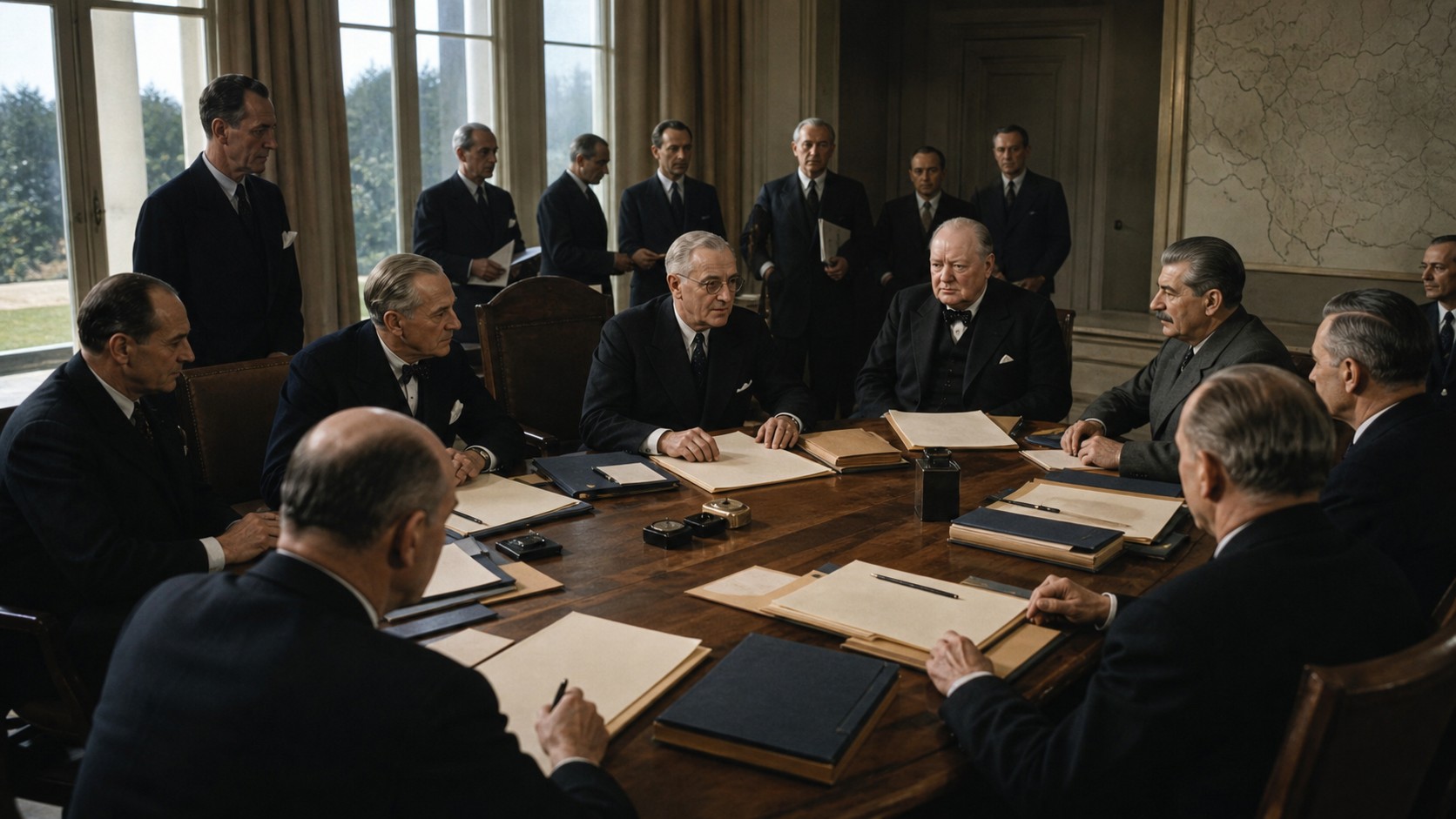
The fall of the Soviet Union in 1991 ended one of the defining political systems and superpower rivalries of the twentieth century. It dissolved a vast multinational state, ended the Cold War's central confrontation, and created new countries, new security questions, and a new balance of power. The collapse was not caused by one event. It grew from economic stagnation, political reform, nationalist movements, legitimacy problems, military pressure, and a system that could no longer hold its contradictions together.
A: Public decisions pass through rules, budgets, negotiations, legal review, and implementation limits.
A: No. A law creates authority, while policy includes the plans and actions used to carry it out.
A: Parties organize voters, candidates, agendas, committees, fundraising, and legislative priorities.
A: Yes, especially when it affects elections, coalitions, protests, media attention, or official legitimacy.
A: Courts interpret legal boundaries that shape what officials and agencies can do.
A: Reform has to survive law, funding, administration, opposition, and unintended consequences.
A: History, institutions, party systems, courts, budgets, and public values differ.
A: Ask who has authority, what rule changes, how it is funded, and how results are measured.
A: Local offices often handle services people experience directly, including zoning, schools, roads, and public safety.
A: Transparency, accountability, fair procedure, competent service, and public correction of mistakes.
The Soviet System
The Soviet Union was a one-party state organized around Communist Party rule, central planning, state ownership, security services, and a federal structure that contained many national republics.
It achieved rapid industrialization, military power, space achievements, and global influence, but it also relied on censorship, repression, shortages, and limited political freedom.
The system’s strength and weakness both came from central control. It could mobilize resources, but it struggled to adapt, innovate, and admit failure.
Economic Stagnation
By the late twentieth century, the Soviet economy faced slow growth, inefficient production, poor consumer goods, agricultural problems, and technological gaps.
Central planning could set targets, but it often rewarded quantity over quality and discouraged local initiative.
Economic weakness damaged legitimacy because the state promised a superior system but increasingly struggled to meet ordinary needs.
The Burden of Military Competition
The arms race with the United States consumed enormous resources. Nuclear weapons, conventional forces, space programs, and global commitments placed pressure on the Soviet economy.
Military strength kept the Soviet Union a superpower, but it also made reform harder because security commitments competed with domestic needs.
The war in Afghanistan added human, financial, and political costs while undermining confidence in leadership.
Gorbachev’s Reforms
Mikhail Gorbachev introduced reforms associated with perestroika and glasnost, aiming to restructure the economy and open public discussion.
The reforms were meant to save socialism, not destroy the Soviet Union. Yet openness exposed corruption, historical crimes, economic weakness, and public frustration.
Once criticism became more possible, the party found it harder to control the story of its own legitimacy.
Nationalism in the Republics
The Soviet Union contained many republics with distinct languages, histories, and national identities.
As central control weakened, nationalist movements demanded autonomy or independence in the Baltic states, the Caucasus, Ukraine, and elsewhere.
These movements showed that the Soviet state was not only an ideological system. It was also an empire-like structure holding many peoples under one center.
The Failed Coup
In August 1991, hardliners attempted a coup against Gorbachev, fearing the loss of central control.
The coup failed, but it accelerated the collapse by discrediting the old guard and strengthening republican leaders such as Boris Yeltsin.
After the coup, the Communist Party’s authority rapidly crumbled and republics moved more decisively toward independence.
Dissolution and New States
In December 1991, the Soviet Union formally dissolved. Fifteen independent states emerged from the former union.
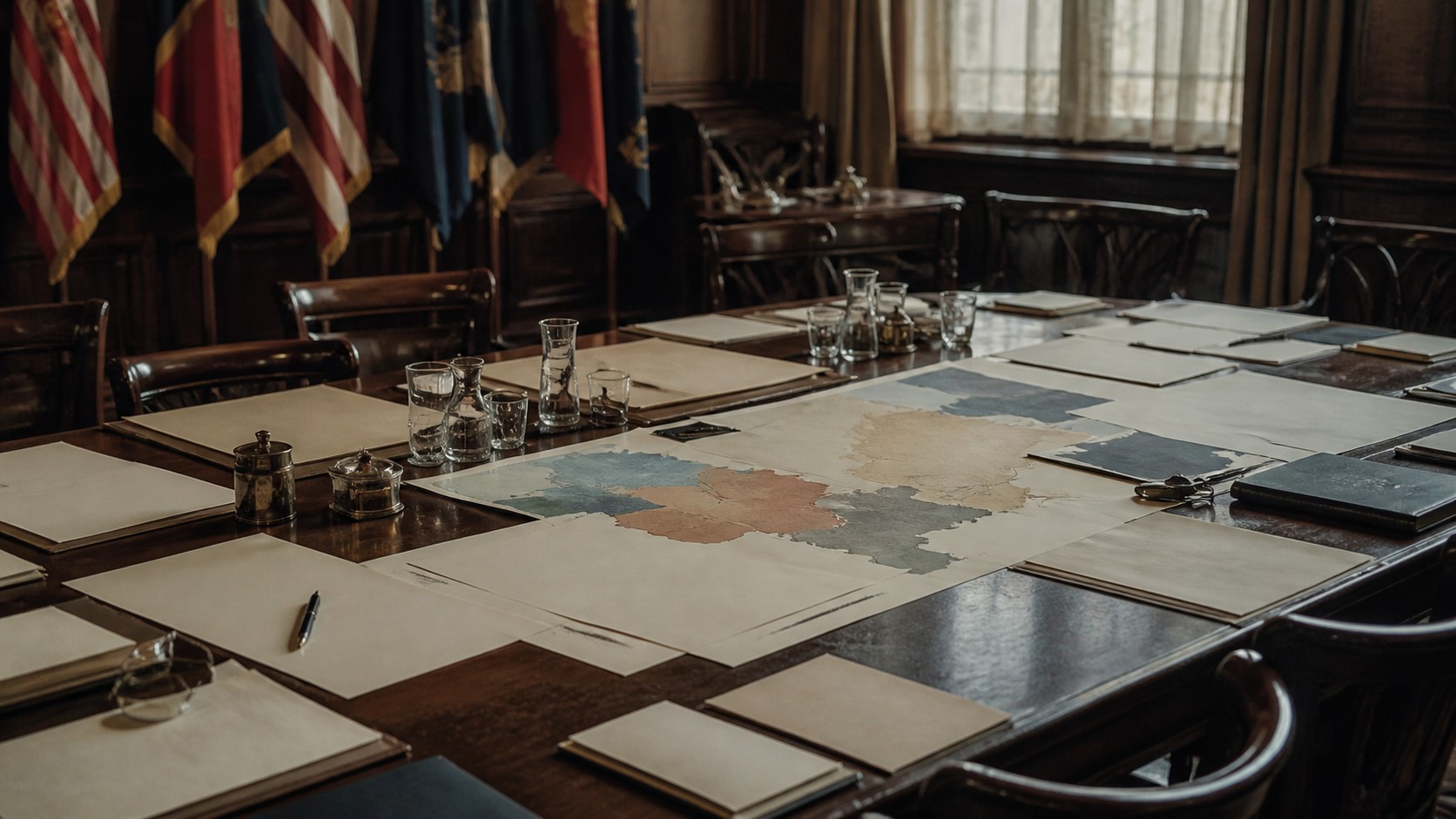
The transition created questions about borders, citizenship, nuclear weapons, military assets, debts, markets, and political authority.
For millions of people, the collapse was not only geopolitical. It changed jobs, savings, identities, institutions, and daily life.
The New World Order
The United States emerged as the leading global power, and many analysts described the 1990s as a unipolar moment.
NATO, the European Union, Russia, China, and newly independent states all had to adjust to the absence of the old Cold War structure.
The end of one rivalry did not end history. It created new questions about intervention, globalization, democracy promotion, regional conflict, and Russian identity.
The Long Aftermath
The Soviet collapse continues to shape politics through NATO expansion debates, Russian domestic politics, energy routes, conflicts in former Soviet space, and arguments over democracy and sovereignty.
Some remember the collapse as liberation, others as social chaos or geopolitical humiliation.
Those competing memories still influence foreign policy and national identity across the region.
Nuclear Weapons and Security
The Soviet collapse created urgent questions about nuclear weapons located across several former Soviet republics.
Diplomats and officials had to manage command, control, transfer, dismantlement, and security so that nuclear materials and weapons did not become unstable in the middle of state collapse.
That work showed that the end of a superpower can create dangers even when a war ends peacefully.
Market Transition and Social Shock
The move from central planning toward market systems brought privatization, inflation, inequality, unemployment, corruption, and new opportunities at the same time.
Some people gained freedom and entrepreneurship, while others lost savings, status, and social security they had depended on.
The political memory of the transition still matters because economic shock can shape how citizens judge democracy, capitalism, and national strength.
That memory helps explain why the fall of the Soviet Union remains a living political subject rather than only a dated historical event.
A clean geopolitical map cannot capture that social experience. The collapse changed institutions, but it also changed what people believed about promises, stability, and the cost of sudden transformation.
That is why memory of 1991 still shapes politics.
How to Read the Soviet Collapse
Avoid single-cause explanations. Economic weakness, reform, nationalism, legitimacy, military pressure, and leadership choices all interacted.
Separate the fall of communism in Eastern Europe from the formal dissolution of the Soviet Union, while recognizing that the two were connected.
Look at the human scale as well as the strategic scale. State collapse changes borders and alliances, but also households, jobs, pensions, and identities.
The strongest view treats 1991 as both an ending and a beginning for today’s global order.
Why This Topic Still Matters in Public Life
The clearest way to understand The Fall of the Soviet Union and the Birth of a New World Order is to ask how the idea changes authority, responsibility, and public expectations. The article’s main themes around Fall, Soviet, and Union should help a reader see who has authority, what choices are available, and why the outcome matters beyond a headline or campaign phrase.
For The Fall of the Soviet Union and the Birth of a New World Order, institutional responsibility is the first anchor. The sections on the new world order, the long aftermath, and nuclear weapons and security point to the offices, rules, habits, or political pressures that turn an abstract issue into action. That keeps the topic grounded in visible structures instead of leaving it as a broad opinion about public affairs.
The public-facing side of The Fall of the Soviet Union and the Birth of a New World Order is just as important. For ordinary people, the issue may show up through access, cost, risk, representation, legal duties, public trust, or the ability to challenge a decision. The topic becomes easier to judge when those encounters show what people can ask, challenge, use, support, or oppose.
The tradeoffs in The Fall of the Soviet Union and the Birth of a New World Order also deserve attention. The topic can involve speed, fairness, cost, liberty, security, representation, expertise, and trust at the same time. Strong public judgment comes from naming those tradeoffs plainly and showing why reasonable people may weigh them differently.
Accountability gives The Fall of the Soviet Union and the Birth of a New World Order its practical test. The article has to make clear which institution can act, which record can be checked, which promise can be tested, and which remedy exists if the system fails. That review is stronger when it follows the trail from public claim to legal authority, implementation, oversight, and correction. Without that trail, public language can sound impressive while leaving ordinary people unsure where responsibility actually sits.
That is why this topic should be read through consequences as well as definitions. The details in market transition and social shock and how to read the soviet collapse matter because they show whether the topic affects a narrow procedural question, a durable public rule, or a broader argument about how power should be organized.
People do not need to memorize every technical term in The Fall of the Soviet Union and the Birth of a New World Order. It is enough to ask what changed, who benefits, who carries the burden, what safeguards exist, and whether the public can review the result. Those questions turn the subject into usable public knowledge.
Viewed that way, The Fall of the Soviet Union and the Birth of a New World Order becomes less about a single definition and more about responsible public judgment. The point is to understand how decisions are made, how they are limited, and how citizens can recognize whether the system is doing the work it claims to do.
History adds another layer to The Fall of the Soviet Union and the Birth of a New World Order. The meaning of the topic can change as institutions mature, public expectations shift, and later conflicts reveal weaknesses that were easier to miss at first. Looking at the subject over time helps readers separate temporary controversy from durable change.
Scale changes how The Fall of the Soviet Union and the Birth of a New World Order works. The closer the subject gets to implementation, the more important it becomes to ask who has the staff, money, and authority to carry it out. A national argument may look simple from a distance, while local offices, courts, schools, agencies, or community groups experience the issue in uneven ways. The closer a reader gets to implementation, the easier it becomes to see why broad promises need practical design.
Language around The Fall of the Soviet Union and the Birth of a New World Order also has to be tested against action. If leaders describe the issue as reform, protection, freedom, stability, efficiency, or fairness, the next question is how that claim appears in budgets, deadlines, procedures, staff capacity, and public results.
A practical view of The Fall of the Soviet Union and the Birth of a New World Order leaves room for disagreement without making the subject vague. People may value Fall, Soviet, and Union differently, but they can still argue from a clearer shared picture of what the institutions are doing and what consequences follow.
The lasting lesson from The Fall of the Soviet Union and the Birth of a New World Order is that public issues are rarely solved by one speech, one vote, one ruling, or one headline. The topic becomes understandable when people trace the connections among authority, incentives, implementation, oversight, and the people affected by the final decision.
For The Fall of the Soviet Union and the Birth of a New World Order, the strongest public explanation also keeps the human consequence in view. Institutions matter because they decide who waits, who pays, who receives protection, who gains access, who faces limits, and who has enough information to respond.
The subject also benefits from comparison. Looking at the new world order beside nuclear weapons and security shows whether the issue is mainly about design, leadership, legal authority, public behavior, or the friction between several forces at once.
That broader frame makes The Fall of the Soviet Union and the Birth of a New World Order more useful than a stand-alone definition. It gives the topic enough context to support judgment, enough detail to avoid oversimplifying, and enough practical grounding to keep the discussion connected to real public life.
Bottom Line on the Fall of the Soviet Union
The fall of the Soviet Union ended a superpower, dissolved a multinational state, and reshaped global politics after the Cold War.
Its causes were structural and political, and its consequences still shape security, democracy, nationalism, and international order.