The United Nations Emerged From World War II as a Test of Collective Security
The United Nations was created after World War II because the old system of diplomacy had failed to prevent depression, aggression, genocide, and global war. Its founders wanted a forum where states could talk before conflicts widened, coordinate relief after disaster, protect basic human rights, and give smaller countries a voice in world affairs. The UN has never been a world government, and it has never removed power politics from international life. Its importance comes from the way it gives conflict, cooperation, law, aid, and legitimacy a public institutional stage.
A: Public decisions pass through rules, budgets, negotiations, legal review, and implementation limits.
A: No. A law creates authority, while policy includes the plans and actions used to carry it out.
A: Parties organize voters, candidates, agendas, committees, fundraising, and legislative priorities.
A: Yes, especially when it affects elections, coalitions, protests, media attention, or official legitimacy.
A: Courts interpret legal boundaries that shape what officials and agencies can do.
A: Reform has to survive law, funding, administration, opposition, and unintended consequences.
A: History, institutions, party systems, courts, budgets, and public values differ.
A: Ask who has authority, what rule changes, how it is funded, and how results are measured.
A: Local offices often handle services people experience directly, including zoning, schools, roads, and public safety.
A: Transparency, accountability, fair procedure, competent service, and public correction of mistakes.
Why the League of Nations Was Not Enough
The League of Nations was created after World War I with the hope that open diplomacy and collective pressure could reduce the chance of another catastrophic war. It introduced a new ideal, but it lacked the authority, membership, and enforcement power needed to restrain aggressive states.
The United States never joined the League, and several major powers either left or ignored it when national ambitions grew stronger than international rules. Japan’s actions in Manchuria, Italy’s invasion of Ethiopia, and Nazi Germany’s expansion all exposed the League’s weakness.
When World War II began, many leaders concluded that a postwar organization would need broader participation, clearer structures, and a stronger connection to the military and economic power of the major allies.
The Wartime Origins of the UN
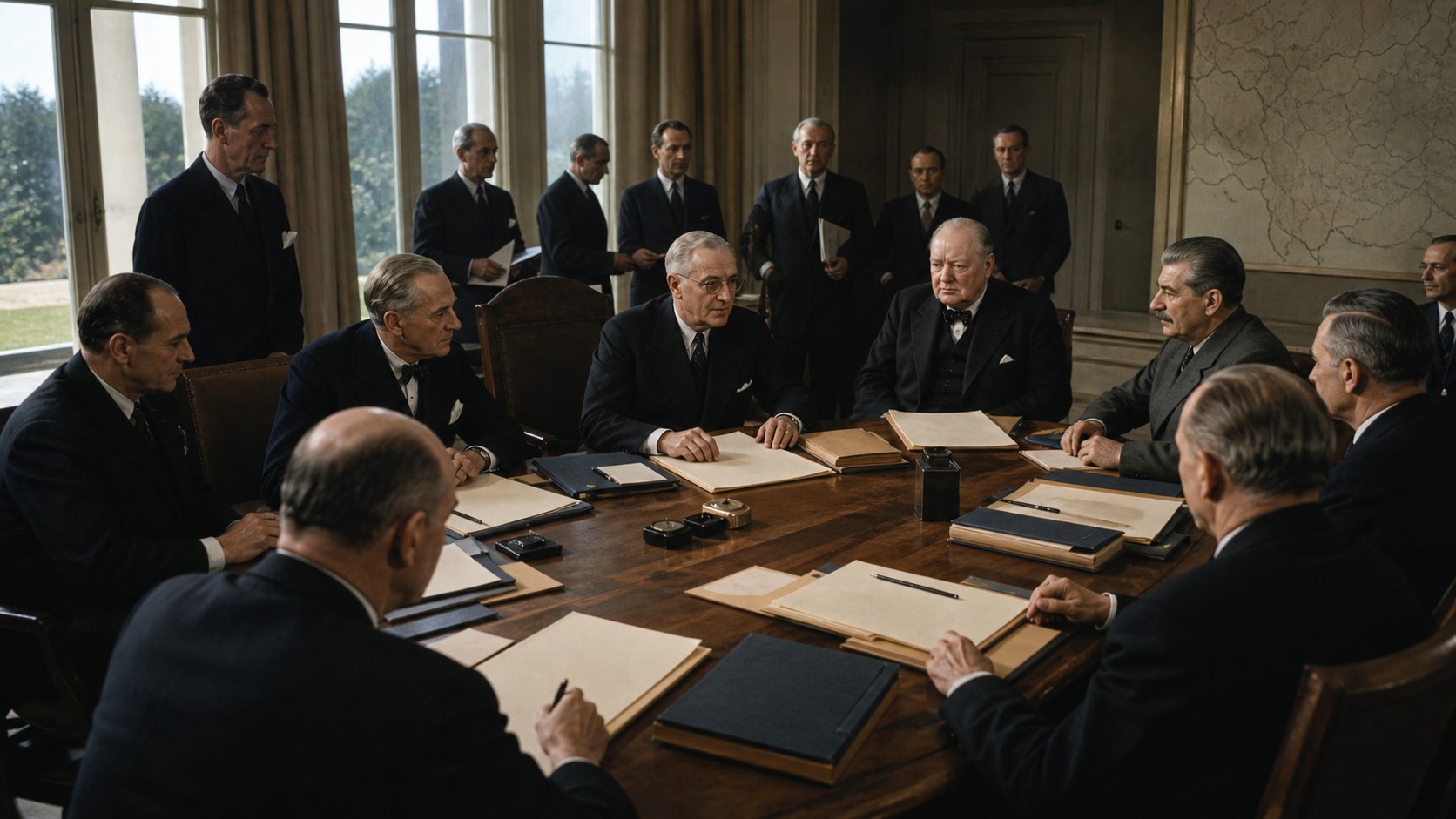
The United Nations was planned during the war, not after peace had already arrived. Allied leaders discussed a new international body while armies were still fighting across Europe, North Africa, Asia, and the Pacific.
The Atlantic Charter, the Declaration by United Nations, the Moscow and Tehran conferences, and later the Dumbarton Oaks conversations all helped shape the idea. These meetings linked military victory to a future order built around cooperation and security.
The goal was practical as well as moral. Leaders wanted to avoid another cycle in which defeated enemies, economic collapse, and weak diplomacy created conditions for a new war.
The San Francisco Conference
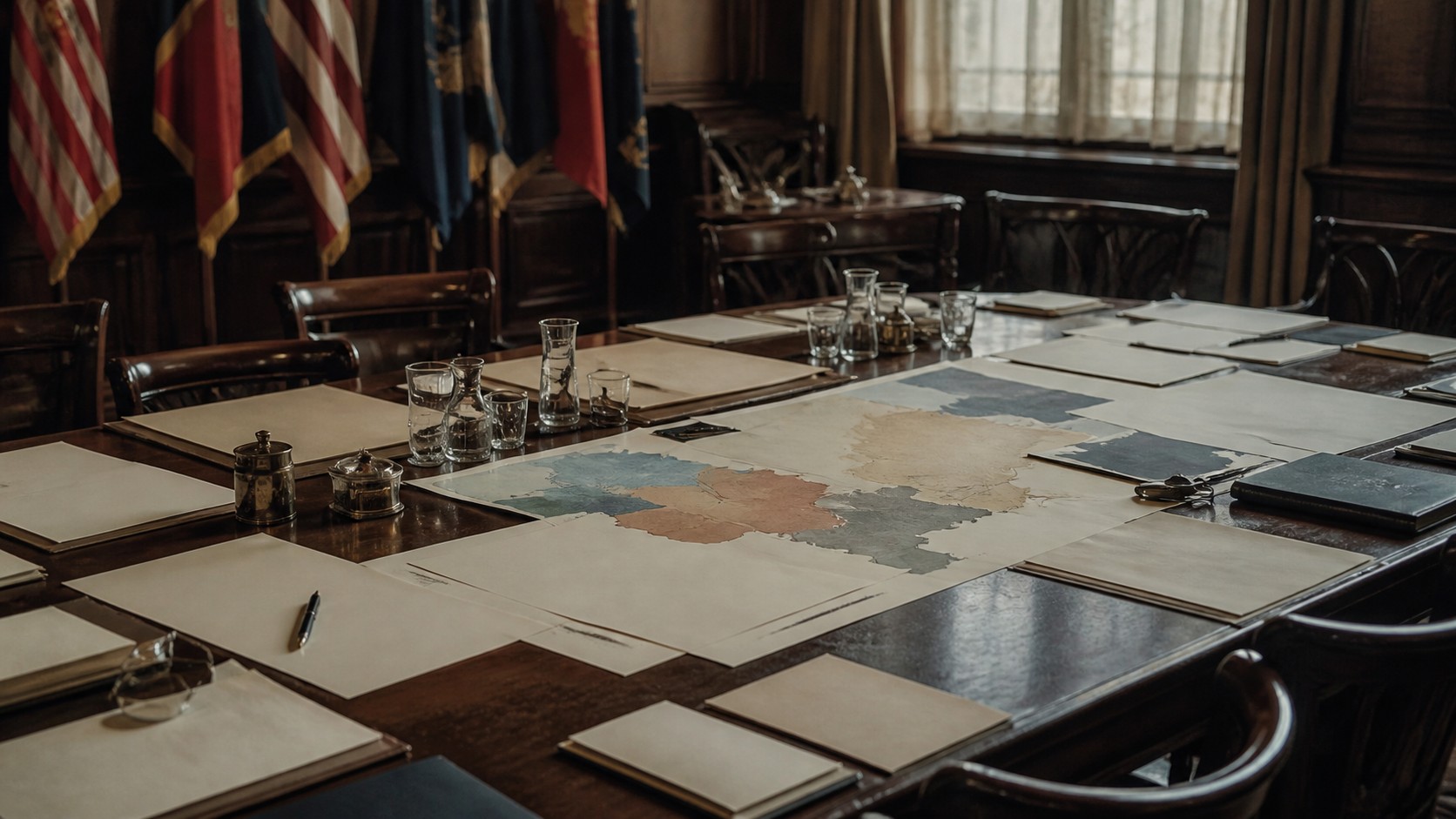
In 1945, delegates gathered in San Francisco to draft and approve the UN Charter. The conference brought together countries with different interests, sizes, regions, and political systems.
The charter tried to balance ideals with power. It affirmed equal sovereign membership, peaceful dispute settlement, human rights, and social progress, but it also gave special authority to the most powerful wartime allies through the Security Council.
That compromise reflected the central lesson of the failure of the League. A new organization could not work if great powers stayed outside it, but it would also struggle if their power was not constrained by any public forum.
The Security Council and the Veto
The Security Council became the UN body most closely tied to international peace and security. It can authorize sanctions, peacekeeping missions, and force under certain conditions.
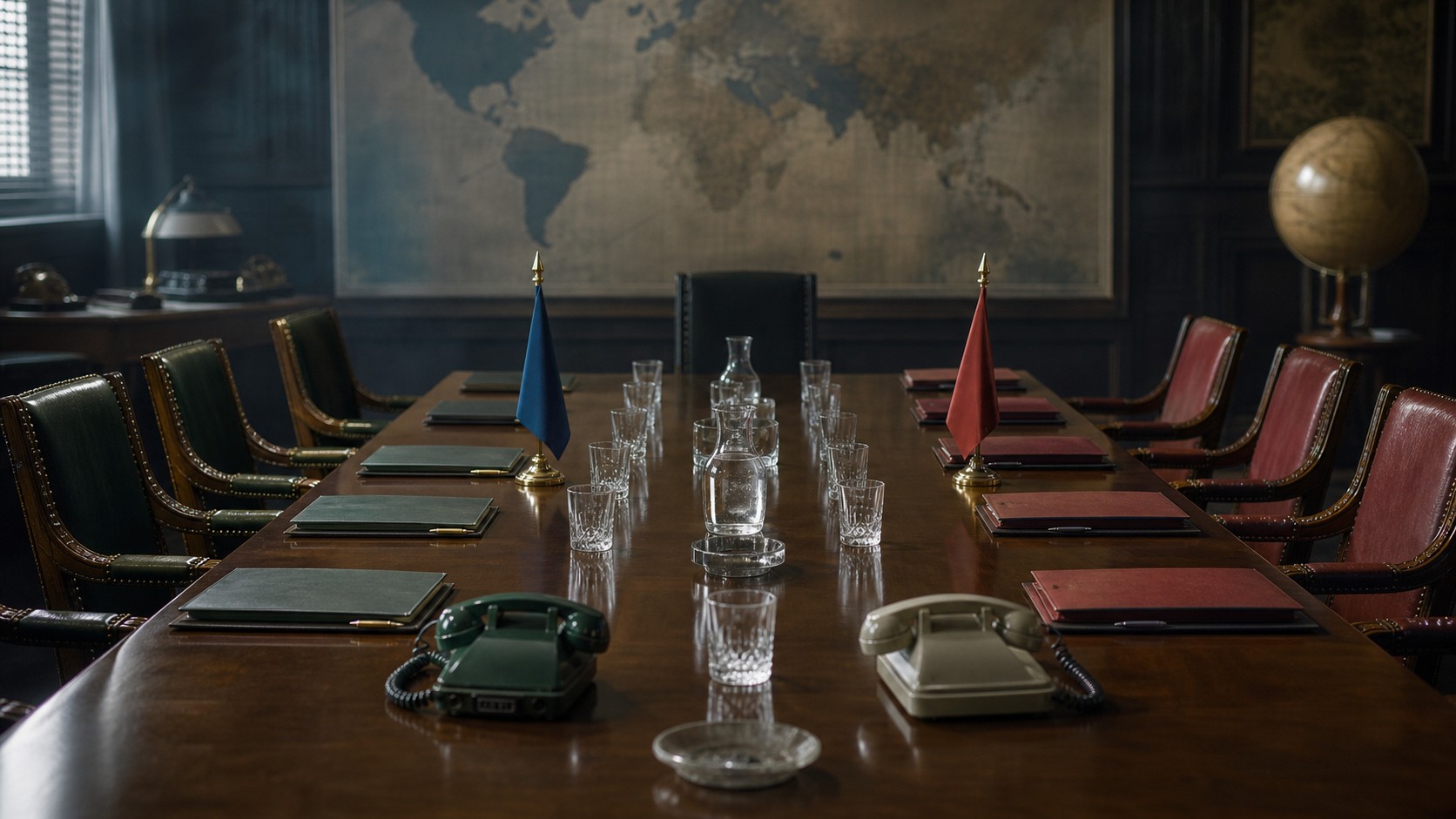
Five permanent members received veto power: the United States, the United Kingdom, France, China, and the Soviet Union, later represented by Russia. The veto was controversial from the beginning because it made the council unequal.
The veto also made the organization politically survivable. Major powers were unlikely to join an institution that could authorize action against their core interests without their consent. The result is a system that can be powerful when major powers agree and limited when they clash.
The General Assembly
The General Assembly gives every member state a forum to debate, vote on resolutions, set agendas, and express international opinion. Its resolutions are usually not binding in the same way as Security Council decisions, but they can shape legitimacy and diplomatic pressure.
For smaller states, the General Assembly matters because it gives visibility to issues that might otherwise be controlled by larger powers. Decolonization, development, apartheid, climate, and human rights have all moved through assembly debates.
The assembly also shows the diversity of international politics. It can reveal moral consensus, regional blocs, ideological conflict, and frustration with the limits of the Security Council.
Human Rights and International Law
The UN helped place human rights near the center of postwar international debate. The Universal Declaration of Human Rights, adopted in 1948, became a landmark statement of dignity, liberty, equality, and protection from abuse.
The organization also became connected to treaties, courts, monitoring bodies, refugee protections, and humanitarian law. These tools do not enforce themselves, but they give advocates, governments, judges, and citizens a shared language for challenging abuse.
The gap between principle and practice remains large. Still, the UN system made it harder for governments to claim that treatment of people inside their borders was never a matter of international concern.
Peacekeeping and Humanitarian Work
UN peacekeeping developed as a practical tool for monitoring ceasefires, separating forces, supporting elections, protecting civilians, and stabilizing fragile settlements. It was not originally spelled out in detail in the charter, but it became one of the organization’s most visible roles.
Peacekeeping works best when there is a political agreement to support, clear authority, credible resources, and cooperation from local and international actors. It struggles when there is no peace to keep or when powerful states send mixed signals.
Beyond security, UN agencies and related organizations work on food, health, refugees, children, development, culture, labor, aviation, communications, and disaster response. That everyday work is less dramatic than Security Council conflict but often more directly felt.
Cold War Limits and Postwar Value
The Cold War limited the UN because the United States and Soviet Union often blocked each other. Many conflicts moved through proxy struggles, vetoes, and competing ideological claims.
Even then, the UN provided meeting space, crisis channels, technical agencies, humanitarian work, and a stage for newly independent countries. It did not end power politics, but it gave power politics procedures and records.
That is the central paradox of the United Nations. It is criticized for weakness, yet many of its weaknesses reflect the unwillingness of member states to surrender power. The organization can coordinate what governments permit; it cannot make sovereign states virtuous by itself.
How to Judge the United Nations Fairly
The fairest way to judge the UN is to ask which part of the system is being discussed. The Security Council, General Assembly, peacekeepers, refugee agencies, health agencies, and treaty bodies do different kinds of work.
It also helps to separate institutional design from member-state politics. A failure may come from weak UN management, but it may also come from governments refusing money, troops, authority, or diplomatic support.
Citizens should ask whether the UN is being expected to act like a world government. It is not one. It is a forum and operating system for cooperation among states that still guard their own power.
The UN matters most when it creates channels for negotiation, relief, norms, records, and coordinated action that would be harder to build from scratch during each crisis.
Why This Topic Still Matters in Public Life
The practical value of How the United Nations Emerged From the Ashes of World War II appears when people can connect the topic to institutions, decisions, and everyday consequences. The article’s main themes around United, Nations, and Emerged should help a reader see who has authority, what choices are available, and why the outcome matters beyond a headline or campaign phrase.
For How the United Nations Emerged From the Ashes of World War II, institutional responsibility is the first anchor. The sections on the general assembly, human rights and international law, and peacekeeping and humanitarian work point to the offices, rules, habits, or political pressures that turn an abstract issue into action. That keeps the topic grounded in visible structures instead of leaving it as a broad opinion about public affairs.
The public-facing side of How the United Nations Emerged From the Ashes of World War II is just as important. A voter, student, worker, official, business owner, or neighborhood group may experience the issue from a different angle. The topic becomes easier to judge when those encounters show what people can ask, challenge, use, support, or oppose.
The tradeoffs in How the United Nations Emerged From the Ashes of World War II also deserve attention. The topic can involve speed, fairness, cost, liberty, security, representation, expertise, and trust at the same time. Strong public judgment comes from naming those tradeoffs plainly and showing why reasonable people may weigh them differently.
Accountability gives How the United Nations Emerged From the Ashes of World War II its practical test. The article has to make clear which institution can act, which record can be checked, which promise can be tested, and which remedy exists if the system fails. That review works best when claims can be tied to named offices, published rules, timelines, and ways for the public to question the result. Without that trail, public language can sound impressive while leaving ordinary people unsure where responsibility actually sits.
That is why this topic should be read through consequences as well as definitions. The details in cold war limits and postwar value and how to judge the united nations fairly matter because they show whether the topic affects a narrow procedural question, a durable public rule, or a broader argument about how power should be organized.
People do not need to memorize every technical term in How the United Nations Emerged From the Ashes of World War II. It is enough to ask what changed, who benefits, who carries the burden, what safeguards exist, and whether the public can review the result. Those questions turn the subject into usable public knowledge.
Viewed that way, How the United Nations Emerged From the Ashes of World War II becomes less about a single definition and more about responsible public judgment. The point is to understand how decisions are made, how they are limited, and how citizens can recognize whether the system is doing the work it claims to do.
History adds another layer to How the United Nations Emerged From the Ashes of World War II. The meaning of the topic can change as institutions mature, public expectations shift, and later conflicts reveal weaknesses that were easier to miss at first. Looking at the subject over time helps readers separate temporary controversy from durable change.
Scale changes how How the United Nations Emerged From the Ashes of World War II works. The same issue can look different in a capital city, a rural county, a court docket, or an agency service desk. A national argument may look simple from a distance, while local offices, courts, schools, agencies, or community groups experience the issue in uneven ways. The closer a reader gets to implementation, the easier it becomes to see why broad promises need practical design.
Language around How the United Nations Emerged From the Ashes of World War II also has to be tested against action. If leaders describe the issue as reform, protection, freedom, stability, efficiency, or fairness, the next question is how that claim appears in budgets, deadlines, procedures, staff capacity, and public results.
A practical view of How the United Nations Emerged From the Ashes of World War II leaves room for disagreement without making the subject vague. People may value United, Nations, and Emerged differently, but they can still argue from a clearer shared picture of what the institutions are doing and what consequences follow.
The lasting lesson from How the United Nations Emerged From the Ashes of World War II is that public issues are rarely solved by one speech, one vote, one ruling, or one headline. The topic becomes understandable when people trace the connections among authority, incentives, implementation, oversight, and the people affected by the final decision.
For How the United Nations Emerged From the Ashes of World War II, the strongest public explanation also keeps the human consequence in view. Institutions matter because they decide who waits, who pays, who receives protection, who gains access, who faces limits, and who has enough information to respond.
The subject also benefits from comparison. Looking at the general assembly beside peacekeeping and humanitarian work shows whether the issue is mainly about design, leadership, legal authority, public behavior, or the friction between several forces at once.
That broader frame makes How the United Nations Emerged From the Ashes of World War II more useful than a stand-alone definition. It gives the topic enough context to support judgment, enough detail to avoid oversimplifying, and enough practical grounding to keep the discussion connected to real public life.
Bottom Line on the United Nations
The United Nations emerged from World War II as an attempt to prevent future catastrophe through collective security, diplomacy, human rights, and international cooperation.
Its record is mixed because world politics is mixed. The UN cannot erase national interest, but it gives governments and citizens a place to test whether power can be made more accountable to law, relief, and public judgment.