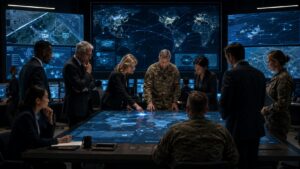
Defense and military strategy are where national security becomes real—shaped by planning, deterrence, logistics, and the difficult choices leaders make under pressure. On Defense & Military Strategy, we explore how governments protect borders, project power, prevent conflict, and respond when diplomacy fails. This section breaks down core strategic concepts like deterrence, force readiness, intelligence, coalition operations, and the balance between speed, precision, and restraint. You’ll dive into how doctrines evolve, how commanders weigh risks, and how modern threats—from cyber operations and drones to space capabilities and information warfare—reshape the battlefield without always firing a shot. We also examine the machinery behind strategy: budgets, supply chains, training pipelines, war-gaming, and civilian oversight that aims to keep military power aligned with democratic control. Along the way, you’ll find historic campaigns, turning-point innovations, and lessons learned that still influence today’s defense posture. Whether you’re studying geopolitics, analyzing security policy, or curious how strategy is built in real time, Defense & Military Strategy offers a clear lens into the calculations that guard stability—and the costs of getting them wrong.
A: Planning how to use force to achieve national goals.
A: Preventing attack by making costs outweigh benefits.
A: A guiding framework for how forces operate and fight.
A: They expand capability and strengthen collective security.
A: How prepared forces are to deploy and operate quickly.
A: It supplies fuel, parts, food, and ammo to sustain operations.
A: It protects and targets systems that enable modern operations.
A: Managing actions to avoid unintended widening of conflict.
A: Civilian leaders, through law, oversight, and budgets.
A: Yes—credible deterrence and diplomacy often stop conflicts early.