

Diplomacy is the quiet engine that keeps nations talking when tensions rise—and treaties are the ink that turns fragile conversation into lasting commitment. On Diplomacy & Treaties, we explore the high-stakes craft of negotiation, alliance-building, and international agreements that shape borders, trade routes, security partnerships, and human rights across the globe. This section breaks down how treaties are drafted, debated, ratified, enforced, and sometimes broken. You’ll discover the roles of diplomats, envoys, international organizations, and backchannel negotiators who work in conference rooms, embassies, and emergency summits where a single clause can change history. Beyond the headlines, we dig into the mechanics: verification, arbitration, sanctions, confidence-building measures, and the delicate balance between national interest and global stability. We also look at landmark agreements, hidden compromises, and the modern challenges of cyber conflict, climate commitments, and shifting alliances. Whether you’re tracking geopolitical strategy or learning how international law is built, Diplomacy & Treaties reveals how words, pressure, and precision can prevent war—and define peace.
A: Diplomacy is the process; a treaty is the formal result.
A: Typically yes under international law once ratified.
A: Diplomats, government officials, and specialized negotiators.
A: Clear terms, verification, and realistic enforcement tools.
A: Often yes, depending on withdrawal clauses and law.
A: An agreement among three or more states.
A: An agreement between two states.
A: Inspections or reporting that confirm compliance.
A: Disputes, sanctions, arbitration, or renegotiation may follow.
A: They reduce uncertainty and help prevent conflict.
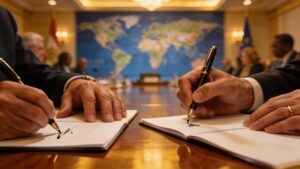
How International Treaties Work: From Negotiation to Enforcement
International treaties shape borders, economies, and peace itself. This guide breaks down how agreements are negotiated, signed, enforced, and sometimes challenged in the real world.

What Is Diplomacy? A Complete Beginner’s Guide to Global Relations
Diplomacy is the art of turning tension into dialogue and national interests into global action. This beginner’s guide explains how diplomacy shapes peace, trade, alliances, and the modern world.