Watergate Changed American Politics by Testing Presidential Accountability
Watergate was the political scandal that forced President Richard Nixon to resign and changed how Americans thought about executive power, secrecy, journalism, congressional oversight, and public trust. It began with a break-in, but it became historic because of the cover-up and the attempt to use presidential power to obstruct accountability.
A: Public decisions pass through rules, budgets, negotiations, legal review, and implementation limits.
A: No. A law creates authority, while policy includes the plans and actions used to carry it out.
A: Parties organize voters, candidates, agendas, committees, fundraising, and legislative priorities.
A: Yes, especially when it affects elections, coalitions, protests, media attention, or official legitimacy.
A: Courts interpret legal boundaries that shape what officials and agencies can do.
A: Reform has to survive law, funding, administration, opposition, and unintended consequences.
A: History, institutions, party systems, courts, budgets, and public values differ.
A: Ask who has authority, what rule changes, how it is funded, and how results are measured.
A: Local offices often handle services people experience directly, including zoning, schools, roads, and public safety.
A: Transparency, accountability, fair procedure, competent service, and public correction of mistakes.
The Break-In and the Larger Context
The Watergate scandal began with the 1972 break-in at Democratic National Committee headquarters in the Watergate complex. The burglars were connected to Nixon’s reelection operation, but the full significance was not immediately clear.
The break-in occurred in a political climate shaped by Vietnam, protest, leaks, secrecy, and Nixon’s intense concern with enemies. The administration already had a pattern of aggressive tactics against perceived opponents.
Watergate became more than a burglary because investigators began uncovering links to campaign money, White House aides, and efforts to hide responsibility.
The Cover-Up
The cover-up involved hush money, false statements, pressure on investigators, and attempts to use government agencies to limit scrutiny. The question became not only who ordered the break-in, but who tried to stop the truth from emerging.
Cover-ups are politically dangerous because they create new misconduct after the original act. Every false explanation becomes another test of credibility.
For Nixon, the cover-up turned a campaign crime into a constitutional crisis. It raised the question of whether a president could place personal and political survival above lawful investigation.
Journalism and Public Pressure
Investigative reporting by the Washington Post and other outlets helped keep Watergate in public view. Reporters followed money, sources, court filings, and contradictions in official accounts.
Journalism did not solve the scandal alone. Courts, prosecutors, congressional committees, whistleblowers, and witnesses were all essential. But journalism helped create pressure for institutions to keep asking questions.
Watergate became a lasting example of why a free press matters in a democracy, especially when officials have incentives to hide abuse.
Congressional Hearings and the Tapes
Senate hearings brought Watergate into American homes through televised testimony. The hearings revealed a wider system of political espionage, cover-up, and abuse of power.
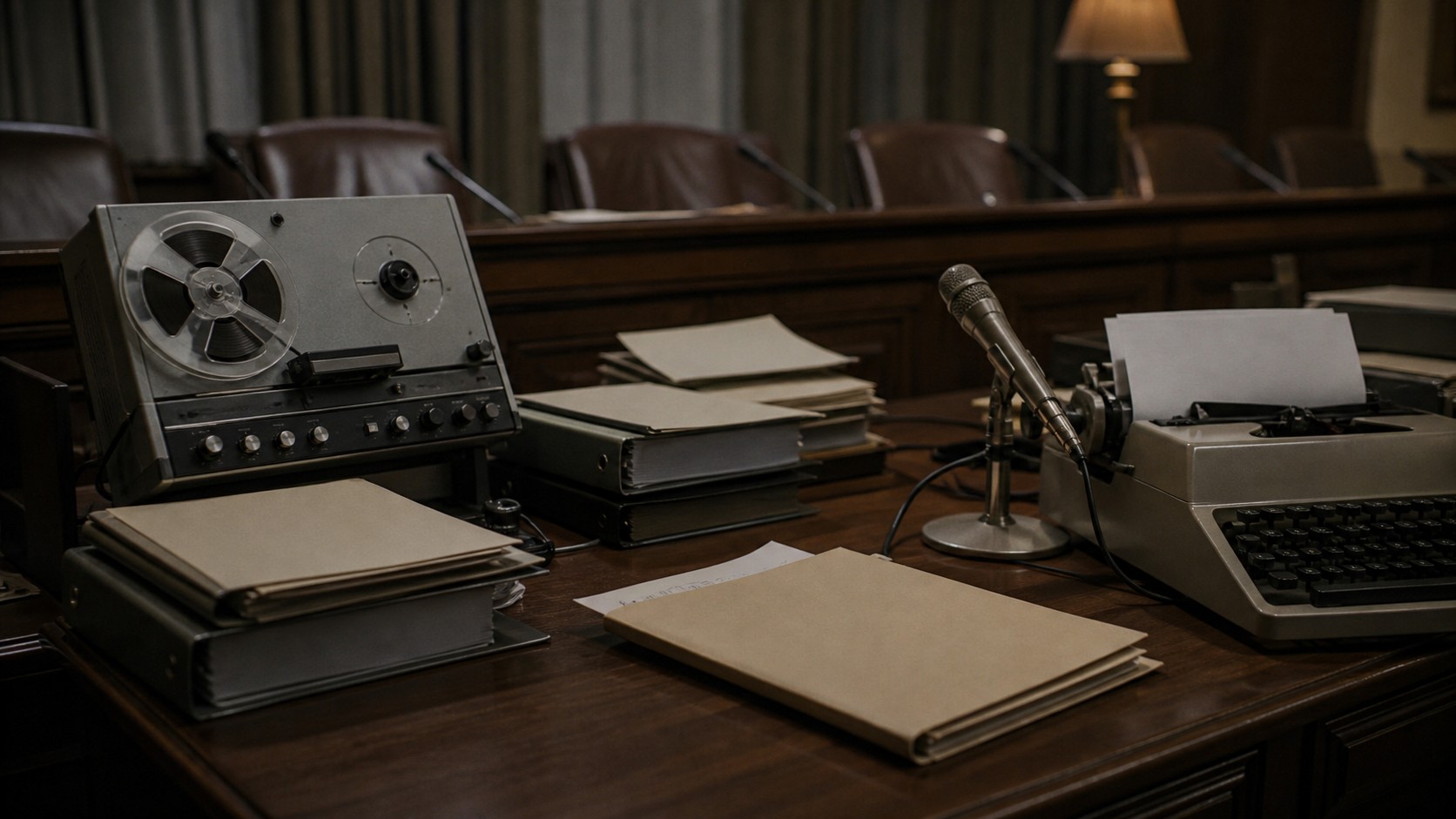
The discovery that Nixon had recorded White House conversations became decisive. The tapes offered direct evidence of presidential involvement in the cover-up.
The battle over the tapes led to a Supreme Court decision requiring Nixon to turn them over. That ruling affirmed that executive privilege has limits when evidence is needed for criminal justice.
The Saturday Night Massacre
The Saturday Night Massacre occurred when Nixon ordered the firing of special prosecutor Archibald Cox after Cox pursued the tapes. Several Justice Department officials resigned or were removed in the crisis.
The event intensified public concern because it looked like the president was trying to shut down the investigation. The issue was no longer only past misconduct; it was ongoing resistance to accountability.
The episode showed how much democratic systems depend on officials who are willing to defend institutional duty even at personal cost.
Resignation and Aftermath
Nixon resigned in August 1974 after the release of evidence and the collapse of political support. He became the only American president to resign from office.
Gerald Ford became president and later pardoned Nixon, arguing that the country needed to move on. The pardon remained controversial because many Americans believed accountability had been cut short.
The scandal led to reforms in campaign finance, ethics, oversight, intelligence scrutiny, and public expectations about presidential transparency.
Why Watergate Still Matters
Watergate still matters because it tested whether a president could be investigated and held accountable within constitutional procedures. The answer, after great strain, was yes.
It also changed public trust. Many Americans became more skeptical of official claims, especially from the executive branch. That skepticism can protect democracy, but it can also deepen cynicism when trust never recovers.
The lasting lesson is that institutions work only when people inside them choose duty over loyalty to a leader.
Reforms and the Post-Watergate Mood
After Watergate, Congress and reformers pushed for stronger rules on campaign finance, ethics, intelligence oversight, public records, and presidential accountability. The goal was to make another abuse of power harder to hide.
The post-Watergate mood also changed journalism and public expectations. Investigative reporting gained prestige, and citizens became more willing to question official explanations from powerful offices.
Reform did not eliminate secrecy, scandal, or abuse. It did create a lasting reference point for how democratic institutions can respond when executive power is used against accountability.
What Watergate Revealed About Presidential Power
Watergate revealed that presidential power is not only formal authority. It also includes access to agencies, lawyers, loyal staff, campaign organizations, national attention, and claims of confidentiality.
Those tools can be legitimate when used for public business. They become dangerous when they are redirected toward personal protection, political spying, or obstruction of lawful investigation.
The scandal also showed that accountability requires pressure from several directions at once. A single judge, reporter, senator, prosecutor, or whistleblower might be ignored. Together, institutions can create a path the president cannot easily escape.
That is why Watergate remains more than a historical episode. It is a map of how executive secrecy can grow and how constitutional systems can answer when people inside the system refuse to look away.
How to Read Watergate as a Civic Lesson
Watergate is useful because it shows the interaction of journalism, courts, Congress, prosecutors, public opinion, and party pressure. No single institution carried the whole burden.
The scandal also shows why records matter. Testimony can be denied and memory can be challenged, but documents and recordings can force a clearer public reckoning.
Citizens should remember that accountability often takes time. The early story may look incomplete, but sustained investigation can reveal whether isolated misconduct was part of a larger pattern.
Watergate should not be used as a loose label for every controversy. Its seriousness came from evidence of obstruction, abuse of power, and presidential involvement.
Why This Topic Still Matters in Public Life
Watergate Explained: The Political Scandal That Changed American History becomes clearer when the subject is treated as a working public system rather than a slogan. The article’s main themes around Watergate, Political, and Scandal should help a reader see who has authority, what choices are available, and why the outcome matters beyond a headline or campaign phrase.
For Watergate Explained: The Political Scandal That Changed American History, institutional responsibility is the first anchor. The sections on resignation and aftermath, why watergate still matters, and reforms and the post-watergate mood point to the offices, rules, habits, or political pressures that turn an abstract issue into action. That keeps the topic grounded in visible structures instead of leaving it as a broad opinion about public affairs.
The public-facing side of Watergate Explained: The Political Scandal That Changed American History is just as important. The public may encounter the issue through school rules, taxes, permits, public safety, campaign messages, legal rights, or international events. The topic becomes easier to judge when those encounters show what people can ask, challenge, use, support, or oppose.
The tradeoffs in Watergate Explained: The Political Scandal That Changed American History also deserve attention. The topic can involve speed, fairness, cost, liberty, security, representation, expertise, and trust at the same time. Strong public judgment comes from naming those tradeoffs plainly and showing why reasonable people may weigh them differently.
Accountability gives Watergate Explained: The Political Scandal That Changed American History its practical test. The article has to make clear which institution can act, which record can be checked, which promise can be tested, and which remedy exists if the system fails. That review should make responsibility visible enough that people can tell whether a promise became action or stopped at rhetoric. Without that trail, public language can sound impressive while leaving ordinary people unsure where responsibility actually sits.
That is why this topic should be read through consequences as well as definitions. The details in what watergate revealed about presidential power and how to read watergate as a civic lesson matter because they show whether the topic affects a narrow procedural question, a durable public rule, or a broader argument about how power should be organized.
People do not need to memorize every technical term in Watergate Explained: The Political Scandal That Changed American History. It is enough to ask what changed, who benefits, who carries the burden, what safeguards exist, and whether the public can review the result. Those questions turn the subject into usable public knowledge.
Viewed that way, Watergate Explained: The Political Scandal That Changed American History becomes less about a single definition and more about responsible public judgment. The point is to understand how decisions are made, how they are limited, and how citizens can recognize whether the system is doing the work it claims to do.
History adds another layer to Watergate Explained: The Political Scandal That Changed American History. The meaning of the topic can change as institutions mature, public expectations shift, and later conflicts reveal weaknesses that were easier to miss at first. Looking at the subject over time helps readers separate temporary controversy from durable change.
Scale changes how Watergate Explained: The Political Scandal That Changed American History works. A broad debate may hide the local steps, staff capacity, records, and appeal paths that determine how the issue works in practice. A national argument may look simple from a distance, while local offices, courts, schools, agencies, or community groups experience the issue in uneven ways. The closer a reader gets to implementation, the easier it becomes to see why broad promises need practical design.
Language around Watergate Explained: The Political Scandal That Changed American History also has to be tested against action. If leaders describe the issue as reform, protection, freedom, stability, efficiency, or fairness, the next question is how that claim appears in budgets, deadlines, procedures, staff capacity, and public results.
A practical view of Watergate Explained: The Political Scandal That Changed American History leaves room for disagreement without making the subject vague. People may value Watergate, Political, and Scandal differently, but they can still argue from a clearer shared picture of what the institutions are doing and what consequences follow.
The lasting lesson from Watergate Explained: The Political Scandal That Changed American History is that public issues are rarely solved by one speech, one vote, one ruling, or one headline. The topic becomes understandable when people trace the connections among authority, incentives, implementation, oversight, and the people affected by the final decision.
For Watergate Explained: The Political Scandal That Changed American History, the strongest public explanation also keeps the human consequence in view. Institutions matter because they decide who waits, who pays, who receives protection, who gains access, who faces limits, and who has enough information to respond.
The subject also benefits from comparison. Looking at resignation and aftermath beside reforms and the post-watergate mood shows whether the issue is mainly about design, leadership, legal authority, public behavior, or the friction between several forces at once.
That broader frame makes Watergate Explained: The Political Scandal That Changed American History more useful than a stand-alone definition. It gives the topic enough context to support judgment, enough detail to avoid oversimplifying, and enough practical grounding to keep the discussion connected to real public life.
Bottom Line on Watergate
Watergate changed American politics by proving that presidential power could be investigated and constrained when evidence showed abuse.
Its legacy is a warning about secrecy and a reminder that constitutional accountability depends on institutions, records, and people willing to defend the public interest.