The Small Machine Changing Big Wars
Drone warfare is rewriting the rules of modern military strategy because it changes one of war’s oldest calculations: who can see, who can strike, and who can survive. For most of military history, battlefield awareness belonged to the side with better scouts, aircraft, satellites, intelligence networks, or expensive surveillance systems. Today, a relatively small unmanned aircraft can give a platoon, militia, navy, border force, or national army a view of the battlefield that once required major military infrastructure. That shift is revolutionary. Drones do not merely add another weapon to the arsenal. They change how commanders think, how soldiers move, how governments spend, how alliances prepare, and how nations deter enemies. They make the battlefield more transparent, more dangerous, and more immediate. A vehicle hidden behind trees, a supply convoy moving at night, an artillery position firing from miles away, or a ship operating near a coastline can all become visible in ways that were far harder to achieve in previous eras. The war in Ukraine has made this transformation impossible to ignore. Ukrainian and Russian forces have used drones for reconnaissance, targeting, long-range strikes, electronic warfare, and battlefield adaptation. Reuters has reported on Ukraine’s expanded mid-range drone strikes against Russian rear areas, with officials and analysts crediting such operations with disrupting logistics and air defenses. Reuters has also reported on Ukraine’s “drone diplomacy” and its development of lower-cost ways to counter drone attacks instead of relying only on expensive missile systems. The result is a new military reality. Drones are not replacing every traditional weapon. Tanks, aircraft, artillery, ships, infantry, missiles, satellites, and cyber capabilities still matter. But drones are changing how all of them operate. They are making old assumptions obsolete and forcing defense planners to rethink everything from camouflage to procurement, from air defense to alliances, from industrial production to the ethics of autonomous weapons.
The Battlefield Is Becoming Transparent
One of the most important effects of drone warfare is the erosion of concealment. In the past, armies could often hide behind distance, terrain, weather, darkness, or deception. Drones have weakened many of those advantages. Small unmanned aircraft can hover, scan, return, relay video, and observe patterns over time. Larger systems can watch deeper areas, while inexpensive commercial-style drones can provide immediate awareness at the tactical level. This does not mean that hiding is impossible. It means hiding is harder, more temporary, and more demanding. Units must move more often, camouflage more carefully, reduce electronic signatures, use decoys, and assume they may be watched. A formation that stays still too long can become a target. A vehicle that emits signals may reveal itself. A headquarters that repeats the same pattern may invite attack.
This transparency changes strategy because surprise becomes harder to achieve. Large troop buildups, supply routes, air defense sites, and artillery positions are more likely to be detected. Commanders must now plan around constant observation, not occasional surveillance. The battlefield is no longer a foggy space where only major intelligence assets provide clarity. It is becoming a networked environment where many small sensors feed a larger picture. That shift benefits agile forces. The side that can collect information quickly, interpret it accurately, and act before the enemy adapts gains an advantage. Drone warfare therefore rewards speed, learning, and integration. It punishes rigid command systems that take too long to turn battlefield information into decisions.
Drones Have Changed the Economics of Military Power
Drone warfare is powerful partly because it changes the cost equation. A relatively inexpensive drone can threaten a far more expensive target. Even when a drone fails to destroy a target, it can force the enemy to spend money, time, attention, and ammunition defending against it.
This creates a strategic problem for advanced militaries. Many traditional defense systems were designed around expensive aircraft, missiles, or ships. They were not built for a world in which dozens, hundreds, or thousands of lower-cost unmanned systems may appear across a battlefield. If a country uses a very expensive interceptor to destroy a low-cost drone, it may win the immediate engagement but lose the economic contest.
That is why counter-drone warfare has become so important. The challenge is not only to stop drones. It is to stop them affordably and repeatedly. Governments are now looking at layered defenses that may include sensors, electronic warfare, interceptor drones, directed energy systems, rapid-fire guns, and better command networks. Moldova’s president recently called for developing interceptor drones after repeated drone-related incidents near the war in Ukraine, showing how even smaller states are being pulled into the counter-drone race. The economics of drones also affect military production. Traditional platforms can take years to build and cost enormous sums. Drone systems can often be produced, modified, and replaced more quickly. This allows rapid experimentation. A design can be tested, adjusted, and redeployed in a compressed time frame. In modern conflict, the ability to learn quickly may be as valuable as the ability to buy expensive equipment.
The Drone War Is Also a Supply Chain War
Behind every drone is a supply chain. Batteries, cameras, chips, motors, sensors, communications links, software, composite materials, and navigation components all matter. Drone warfare therefore connects battlefield success to global manufacturing, technology access, export controls, and industrial policy. This is one of the least glamorous but most important parts of the story. A military that can fly drones today but cannot replace parts tomorrow may lose its advantage. A country that depends on foreign components may find itself vulnerable to sanctions, shortages, or diplomatic pressure. A government that can scale production quickly may shape the pace of a conflict.
CSIS has highlighted the importance of drone supply chains in the war in Ukraine, noting that drones in that conflict depend heavily on global component networks, including Chinese-linked supply chains. That matters because modern warfare is not only a contest of armies. It is also a contest of factories, procurement systems, software updates, and supply resilience. This has major implications for defense strategy. Governments are now asking whether they can produce enough drones, whether they can secure critical parts, whether they can protect domestic industry, and whether allied countries can share production burdens. Drone warfare makes industrial capacity a frontline issue.
Air Defense Is Being Reinvented
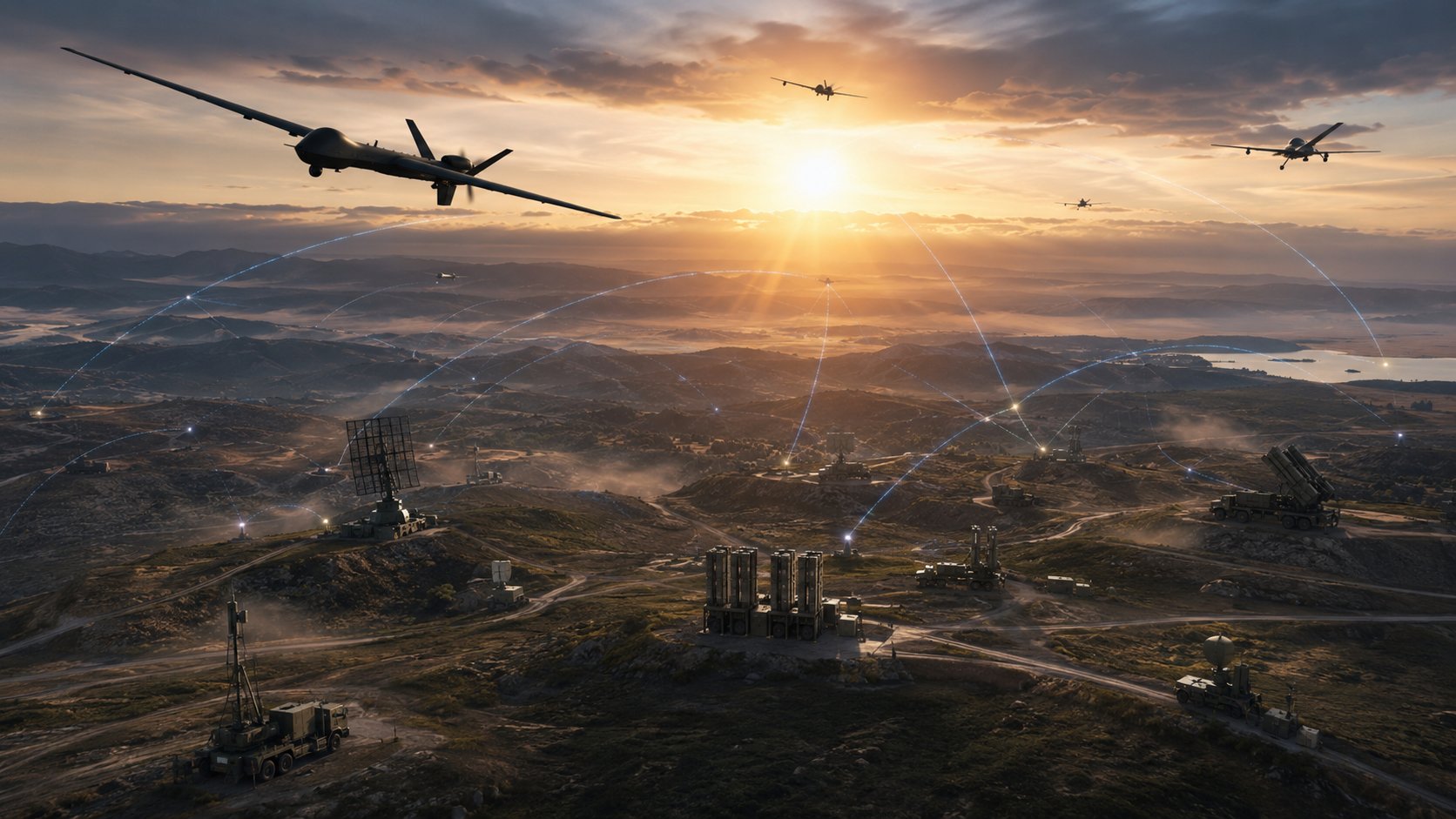
Drones are forcing militaries to rethink air defense from top to bottom. Traditional air defense focused on aircraft, helicopters, cruise missiles, and ballistic missiles. Those threats remain serious, but drones add a new layer of complexity. They can fly low, appear in large numbers, use different sizes and speeds, and sometimes blend military and commercial technologies.
This creates detection problems. A small drone may be difficult to spot on radar. It may fly near cluttered terrain or urban areas. It may be launched from unexpected locations. It may not look like the kind of threat older systems were designed to defeat.
The counter-drone challenge is therefore both technical and organizational. Militaries need better sensors, faster decision-making, clear rules of engagement, electronic warfare tools, and low-cost defeat options. They also need coordination among military bases, civilian airports, police agencies, border authorities, and infrastructure operators. RAND has noted counter-drone defense as a growing concern, including tabletop exercises involving many U.S. federal agencies to examine how military bases might respond to drone incursions. The deeper strategic lesson is that air superiority is no longer just about fighter jets. A country may dominate the skies with advanced aircraft and still struggle to protect bases, vehicles, ships, or critical sites from small unmanned systems. Modern air defense must be layered, flexible, and persistent.
Drones Are Changing Deterrence
Deterrence used to be measured largely through major military capabilities: nuclear weapons, aircraft carriers, armored divisions, long-range missiles, and alliance commitments. Those still matter. But drone warfare has added new tools to deterrence.
A country with effective drone forces can threaten an adversary’s logistics, command posts, airfields, ammunition depots, energy infrastructure, naval assets, and border positions. It can make aggression more costly without matching the enemy platform for platform. This is especially important for smaller countries facing larger rivals.
This is the logic of asymmetric defense. A smaller state may not be able to build the same number of fighter jets, tanks, or warships as a larger power. But it can invest in drones, mobile missile systems, cyber capabilities, dispersed defenses, and resilient communications. The goal is to make invasion, occupation, or coercion too painful to succeed.
Drones can also complicate escalation. Because they can be used for surveillance, harassment, sabotage, or strikes, they may blur the line between warning and attack. A drone crossing a border may be an accident, a probe, a message, or the opening move of something larger. Moldova’s reports of drone debris and airspace incidents near Ukraine show how drone warfare can spill across borders and create diplomatic and security dilemmas even for countries not directly fighting. This means deterrence in the drone age requires more than weapons. It requires communication, airspace rules, crisis channels, and the ability to distinguish between accidental spillover and deliberate escalation.
Commanders Must Think in Networks
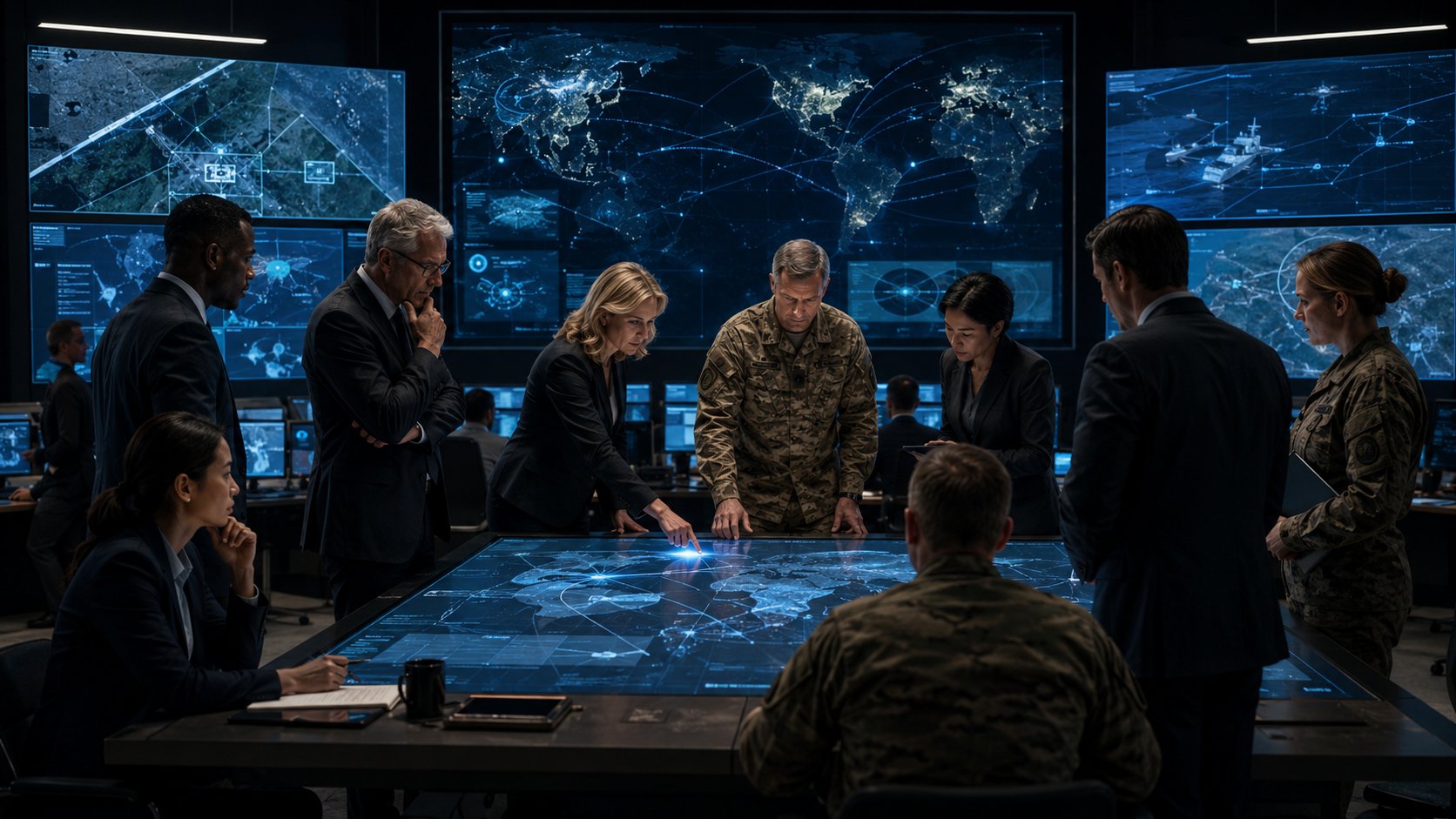
Drones are most powerful when connected to a larger system. A drone by itself is a flying sensor or weapon. A drone connected to artillery, electronic warfare, satellites, command software, intelligence teams, and rapid decision-making becomes part of a networked battlefield.
This is why modern drone warfare is not just about pilots. It is about data. The side that can gather information, share it securely, fuse it with other intelligence, and act quickly gains a strategic edge. Drones compress the kill chain, but they also expand the information chain. They create massive amounts of visual and electronic data that must be understood in real time.
This puts pressure on military organizations. A slow hierarchy may waste the advantage drones provide. If video feeds must pass through too many layers before action is authorized, opportunities disappear. On the other hand, acting too quickly without verification can create mistakes, civilian harm, or escalation. Modern strategy must balance speed with judgment. CSIS has described Ukraine’s military adaptation as part of a broader digital transformation, with both Ukraine and Russia operating hybrid defense ecosystems that combine older military structures with emerging innovation and commercial technology. That hybrid model is becoming a preview of future warfare: not purely traditional, not purely technological, but a fast-moving combination of both.
Electronic Warfare Is Back at the Center
Drone warfare has revived the importance of electronic warfare. Because drones depend on signals, navigation, data links, and control systems, they can be jammed, spoofed, detected, or disrupted. The contest between drones and countermeasures is now a constant cycle of innovation. When one side improves jamming, the other side seeks better autonomy, stronger links, alternative navigation, or new tactics. When one side develops more resilient drones, the other side searches for new ways to detect and defeat them. This creates a rapid adaptation loop.
Electronic warfare also affects everything around drones. Communications networks, artillery coordination, satellite navigation, and command posts can all become part of the same electromagnetic contest. The battlefield is no longer only physical. It is also a struggle over signals. This is another reason military strategy is changing quickly. A tank, aircraft, or artillery system may look powerful, but if it cannot communicate, navigate, or coordinate under electronic attack, its effectiveness may collapse. Drones have made the invisible spectrum more visible as a strategic domain.
Drones Are Reshaping Naval and Maritime Strategy
Drone warfare is not limited to land battlefields. Unmanned systems are changing naval strategy as well. A ship at sea can be threatened by aerial drones, maritime drones, underwater systems, and long-range targeting networks. Ports, chokepoints, and sea lanes are becoming more vulnerable to persistent surveillance and relatively low-cost attack.
This matters in regions such as the Black Sea, Red Sea, Persian Gulf, South China Sea, and Taiwan Strait. Naval power has traditionally relied on mobility, distance, and layered defense. Drones challenge all three. They can extend the reach of coastal powers, complicate fleet movements, and force ships to operate with greater caution near contested zones.
For major navies, the lesson is not that large ships are obsolete. It is that they must operate within a more dangerous sensor-and-strike environment. Ships need better defenses, better deception, stronger electronic warfare, and integration with unmanned systems of their own. The future fleet will likely include crewed vessels working alongside unmanned aircraft, surface vessels, and underwater systems. This changes procurement and doctrine. Navies must think not only about bigger ships, but about distributed networks, survivability, and mass. In some situations, many smaller unmanned platforms may create strategic effects that once required fewer, more expensive assets.
Drone Warfare Is Changing the Role of Soldiers
Drones are also changing the experience of soldiers on the ground. Troops must now assume that overhead surveillance may be constant. Movement, heat signatures, vehicle tracks, radio emissions, and repeated routines can all create danger. The individual soldier is operating in a battlespace where observation is more persistent than ever. At the same time, drones give small units new power. A squad or platoon with drone access can scout terrain, identify hazards, adjust fires, and understand nearby threats more effectively. This can reduce uncertainty and improve decision-making, but it also increases cognitive pressure. Soldiers must learn to interpret drone feeds, avoid detection, and coordinate with digital tools.
Training is changing as a result. Drone pilots, electronic warfare specialists, data analysts, mechanics, and counter-drone operators are becoming central to modern formations. Reuters has reported on Ukrainian drone competitions where pilots test skills that have become essential in the war, reflecting how drone operation now requires practice, talent, and rapid adaptation. The human element remains decisive. Drones do not eliminate courage, leadership, discipline, or morale. They change the environment in which those qualities are tested.
Civilian Technology Is Driving Military Change
One of the most striking features of drone warfare is the role of civilian technology. Commercial drones, consumer electronics, gaming-style controllers, mapping software, 3D printing, and private-sector innovation have all influenced military adaptation. This challenges the old model in which military technology mostly flowed from government labs and defense contractors into civilian life.
Now the flow often runs both ways. A civilian product can be modified for military use. A startup can develop a tool that moves faster than a traditional procurement program. A battlefield need can produce rapid experimentation outside normal bureaucratic channels.
This creates opportunities and risks. On the positive side, militaries can innovate faster and at lower cost. On the negative side, adversaries can do the same. Technologies that are widely available cannot be easily monopolized. The same commercial ecosystem that helps one country defend itself can help another country attack. This is why defense policy increasingly overlaps with technology policy. Export controls, component sourcing, software security, data protection, and industrial partnerships are now part of drone strategy. The future of military power may be shaped as much by supply chains and startups as by traditional arsenals.
The Ethics of Drone Warfare Are Becoming More Urgent
Drone warfare raises difficult ethical and legal questions. Unmanned systems can reduce risk to the operator, but that distance may also change how societies perceive the use of force. If a strike can be launched without putting pilots or soldiers in immediate danger, leaders may face less political resistance to action. There are also concerns about surveillance, civilian harm, accountability, and autonomous decision-making. As drones become more capable, the debate over human control becomes more important. Who is responsible when an automated system misidentifies a target? How much autonomy should a weapon have? What rules should govern drone use in cities, near borders, or around civilian infrastructure?
These questions are not theoretical. They are becoming central to defense strategy because legitimacy matters. A military advantage that causes political backlash, legal controversy, or civilian harm can become a strategic liability. Democracies in particular must balance effectiveness with transparency, law, and public trust. Drone warfare therefore requires ethical strategy, not just technical strategy. The issue is not only what drones can do. It is what governments should authorize them to do.
Drones Do Not Make War Easy
It is tempting to view drones as a shortcut to victory. That would be a mistake. Drones can reveal targets, strike positions, disrupt logistics, and intimidate opponents, but they do not automatically win wars. Territory still matters. Political objectives still matter. Logistics, morale, alliances, leadership, and industrial endurance still matter.
Drone warfare can make conflict more lethal without making it more decisive. A battlefield may become saturated with sensors and strikes, yet still produce stalemate. Both sides can adapt. Both sides can hide, jam, decoy, disperse, and rebuild. Technology changes the contest, but it does not erase the fundamental difficulty of turning military action into political success.
This is why serious defense strategy must avoid hype. Drones are transformative, but they are not magic. They are most effective when integrated with intelligence, artillery, electronic warfare, cyber operations, air defense, logistics, and clear political goals. The future belongs not to the side that merely buys drones, but to the side that understands how to use them within a broader strategy.
The New Rules of Modern Military Strategy
Drone warfare is rewriting the rules of modern military strategy by changing visibility, cost, speed, deterrence, air defense, logistics, and the relationship between civilian technology and military power. It is making battlefields more transparent, forcing armies to move and hide differently, and challenging expensive platforms with cheaper systems. It is pushing governments to rethink procurement, industrial capacity, alliances, and counter-drone defense. The rise of drones does not mean the end of traditional military power. It means traditional military power must adapt. Aircraft, ships, tanks, missiles, satellites, cyber tools, and soldiers all remain important, but they now operate in a world where small unmanned systems can detect, disrupt, and destroy with startling speed.
For policymakers, the lesson is clear. Drone warfare is not a niche topic. It is a central feature of modern defense strategy. Countries that treat drones as accessories will fall behind. Countries that understand them as part of a larger network of sensors, weapons, industry, and decision-making will shape the next era of global security. The drone age has arrived. The question is no longer whether unmanned systems will influence war. The question is whether governments, militaries, and citizens can understand their impact quickly enough to build strategies that deter conflict, defend societies, and prevent technology from outrunning wisdom.