A New Strategic Era Has Arrived
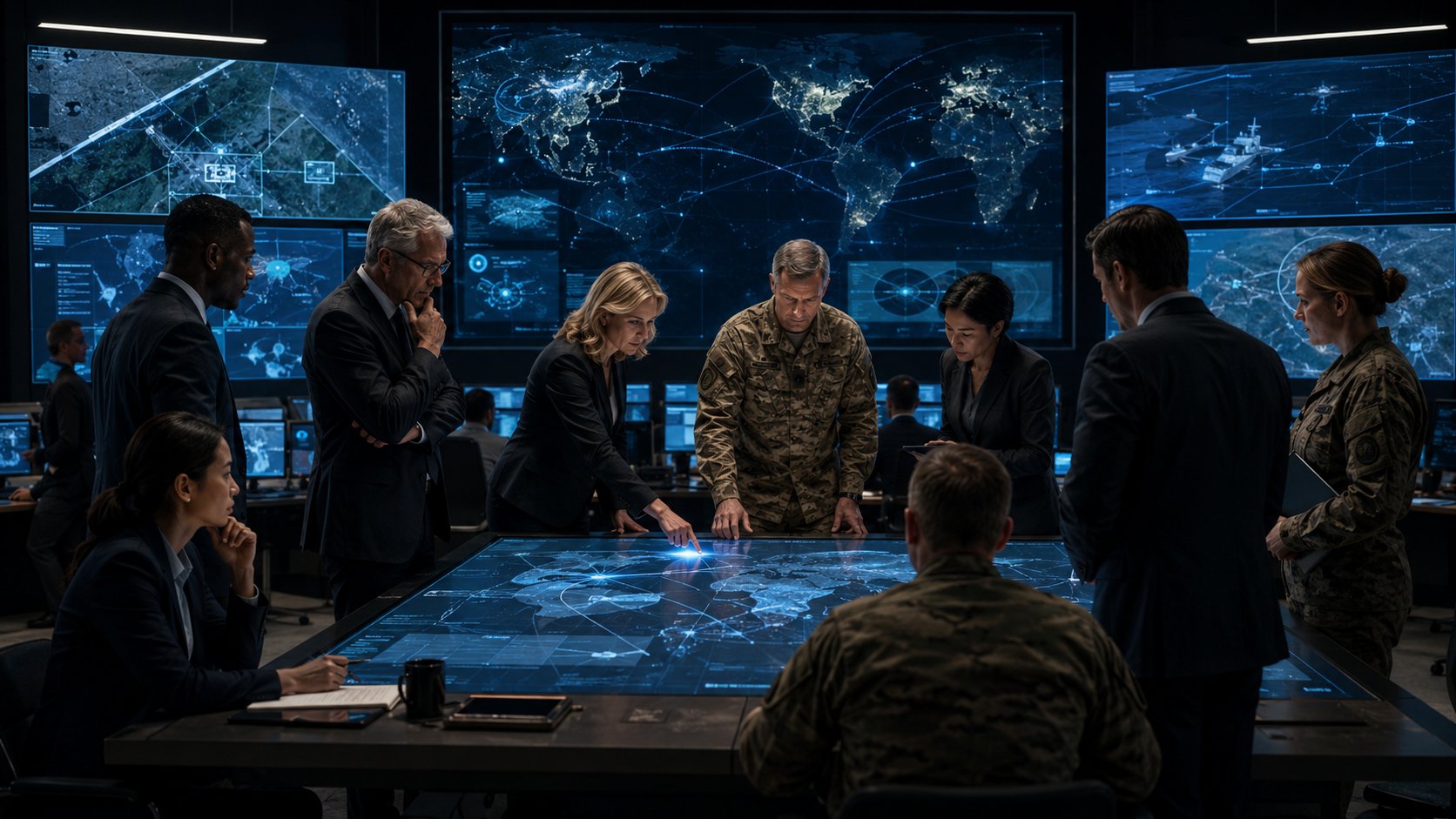
Defense strategy is changing faster than at any time since the Cold War because the world’s security environment has become more crowded, more technological, more unpredictable, and more interconnected. For decades after the fall of the Soviet Union, many governments believed that globalization, trade, diplomacy, and precision military power could keep large-scale conflict contained. That assumption has been shaken. Today, defense planners face a world where conventional wars have returned to Europe, China is expanding its military reach in the Indo-Pacific, drones are transforming the battlefield, cyberattacks can disrupt societies before a shot is fired, and space has become essential to modern military operations. At the same time, alliances are being tested, defense budgets are rising, and countries that once relied heavily on diplomacy are rebuilding hard power. This is not simply a story about new weapons. It is a story about a new way of thinking. Governments are being forced to ask harder questions: How do you deter an enemy that uses missiles, drones, hackers, proxies, economic pressure, and disinformation at the same time? How do you defend a country when the front line may include power grids, ports, satellites, undersea cables, and public opinion? How do you prepare for a conflict that could move from cyberspace to the sea, from air defense to financial sanctions, from local crisis to global emergency in a matter of hours? The answer is that defense strategy is no longer slow, predictable, or limited to traditional military planning. It is becoming faster, broader, and more deeply connected to technology, economics, industry, diplomacy, and society itself.
The Cold War Model No Longer Fits the Moment
During the Cold War, defense strategy was dominated by a relatively clear structure. Two superpowers, the United States and the Soviet Union, shaped much of global security. Nuclear deterrence, large standing armies, military alliances, and ideological competition formed the backbone of international defense planning. While the period was dangerous, the strategic map was easier to understand than today’s environment.
Modern defense strategy is different because power is more dispersed. The United States remains the world’s leading military power, but China has become a central strategic competitor. Russia has shown that large-scale land war is still possible. Regional powers such as Iran, Turkey, India, North Korea, and Saudi Arabia increasingly shape their neighborhoods. Non-state actors, militias, cyber groups, private military firms, and technology companies also influence security outcomes in ways that Cold War planners could not fully imagine.
This makes defense planning harder. During the Cold War, strategy often focused on deterring one main adversary. Today, countries must prepare for multiple threats at once. A government may need to defend against missile attacks, drone swarms, cyber intrusions, disinformation campaigns, supply chain disruption, and military coercion in distant regions. The battlefield has expanded beyond borders and beyond the military. The Cold War was defined by a balance of terror. The new era is defined by a balance of speed. Decisions must be made quickly, weapons must be adapted rapidly, and alliances must respond before crises spiral out of control.
The Return of Great-Power Competition
One of the biggest reasons defense strategy is changing so quickly is the return of great-power competition. The idea that major powers might avoid direct confrontation through economic integration has weakened. Rival states are now preparing for the possibility of prolonged competition, military standoffs, and regional conflict. The United States is reorienting much of its defense strategy around China’s rise. The Indo-Pacific has become a central theater of military planning because of Taiwan, the South China Sea, freedom of navigation, semiconductor supply chains, and the growing reach of China’s navy and missile forces. Defense planners are not only asking whether a conflict could happen. They are asking how to prevent one through deterrence, resilience, and credible military presence.
Russia’s war against Ukraine has also transformed strategic thinking. It reminded Europe that borders can still be changed by force and that modern war can consume enormous quantities of ammunition, drones, vehicles, air defense interceptors, and industrial capacity. The conflict exposed both the importance of advanced technology and the continuing relevance of old fundamentals such as logistics, manpower, trenches, artillery, and endurance. This combination of Chinese power, Russian aggression, and regional instability has pushed defense strategy out of the post-Cold War comfort zone. Countries are no longer planning only for counterterrorism, peacekeeping, or limited interventions. They are preparing for high-intensity conflict, long-term deterrence, and industrial-scale defense production.
Drones Have Changed the Battlefield
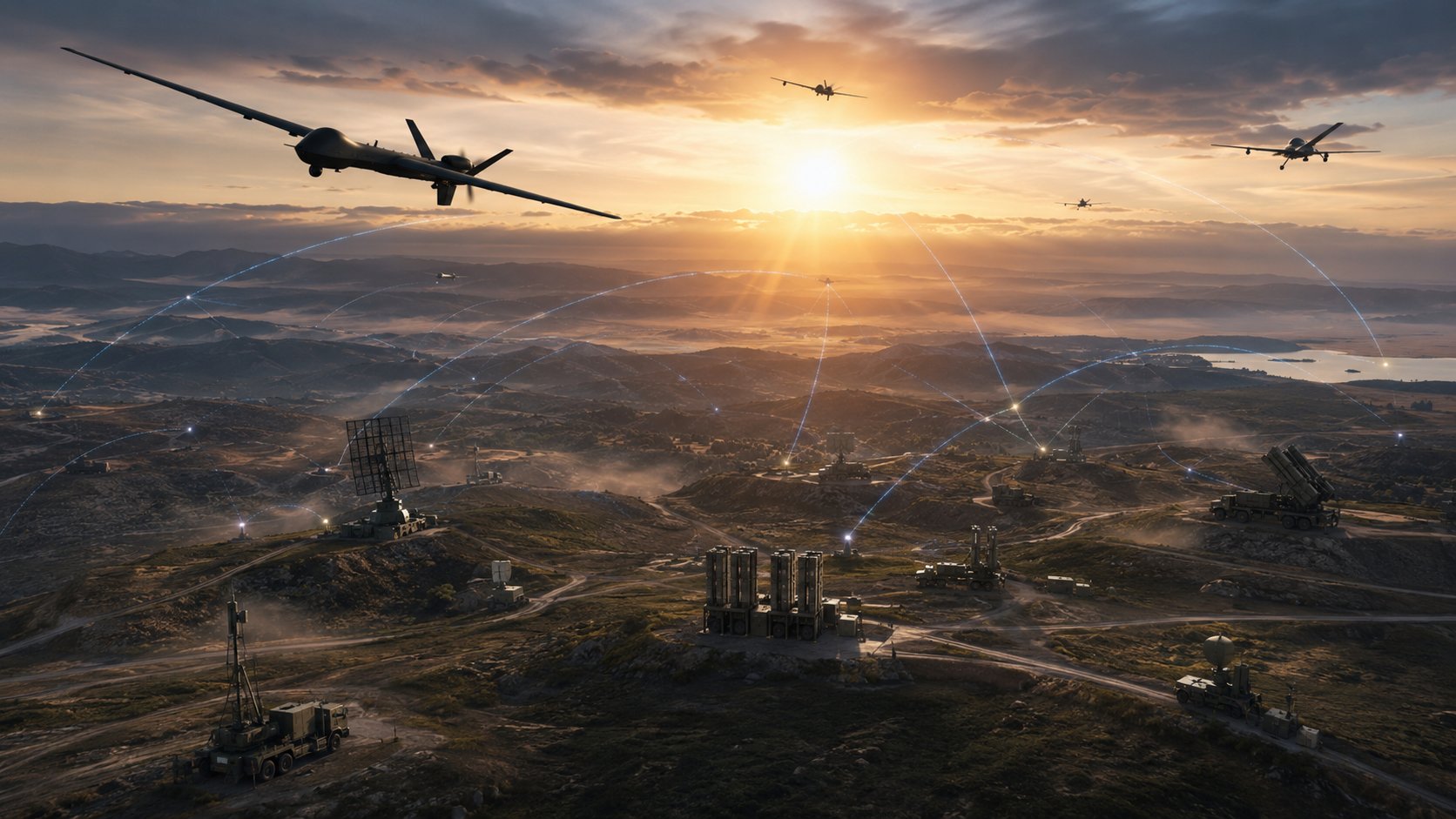
Few technologies have changed defense strategy as visibly as drones. Unmanned systems have moved from specialized military tools to everyday battlefield necessities. They are used for surveillance, artillery spotting, precision strikes, electronic warfare, logistics, and psychological pressure. Small drones can locate targets, guide fires, and destroy expensive equipment at a fraction of the cost of traditional platforms. This has created a strategic shock. Expensive tanks, artillery systems, ships, bases, and command posts can now be threatened by relatively low-cost drones. Militaries must invest not only in drones but also in counter-drone systems, electronic warfare, camouflage, deception, hardened positions, and rapid repair capabilities.
Drone warfare has also compressed the decision cycle. In earlier eras, commanders might have hours or days to analyze battlefield movements. Now, a small drone can detect a position and feed targeting data almost immediately. Survival depends on speed, concealment, mobility, and the ability to disrupt enemy sensors.
The rise of drones is forcing militaries to rethink air defense from the ground up. Traditional air defense systems were often built to stop aircraft and missiles, not thousands of inexpensive drones. The new challenge is economic as much as technical: no country wants to use a million-dollar interceptor against a drone that costs a few thousand dollars. That imbalance is driving a race for cheaper defenses, including jamming systems, directed energy, interceptor drones, rapid-fire guns, and layered detection networks.
Artificial Intelligence Is Entering Military Strategy
Artificial intelligence is becoming one of the most important forces in defense strategy. AI can help process satellite imagery, detect patterns in battlefield data, improve logistics, support cyber defense, guide autonomous systems, and accelerate command decisions. In a world where information moves faster than human staffs can process it, militaries are looking for ways to use AI to see, understand, and act more quickly. The promise is enormous, but so are the risks. AI systems can make mistakes, reflect flawed data, or produce recommendations that human leaders do not fully understand. In military settings, speed can save lives, but it can also create escalation risks. If governments rely too heavily on automated decision-making, they may misread signals or act before diplomacy has a chance to work.
The most important question is not whether AI will be used in defense. It already is. The real question is how much authority humans will give to AI-enabled systems, especially in areas involving lethal force, nuclear warning, cyber escalation, and crisis response. Defense strategy must now include rules for human control, accountability, reliability, and ethics. AI is also changing the defense industry. Traditional weapons programs often take years or decades to develop. Software-driven warfare moves faster. Algorithms can be updated, tested, and deployed far more quickly than ships or aircraft. This means the militaries that adapt fastest may gain advantages not only from better equipment, but from better learning systems.
Cyber Warfare Has Become a Strategic Weapon
Cyber conflict has transformed defense strategy because it allows states and non-state actors to attack without launching a traditional invasion. A cyberattack can target banks, hospitals, ports, pipelines, military networks, election systems, media platforms, or power grids. It can create confusion, weaken trust, and slow a country’s ability to respond during a crisis.
This makes cyber defense a national security priority, not just an information technology issue. Governments must protect military systems, civilian infrastructure, private companies, and public institutions. The line between civilian and military targets has become dangerously blurred.
Cyber operations also complicate deterrence. Traditional deterrence depends on knowing who attacked and being able to threaten a response. In cyberspace, attribution can be difficult, attacks can be routed through third parties, and the damage may fall below the threshold of war. That creates opportunities for gray zone competition, where countries pressure each other without triggering open conflict. Defense strategy must now account for attacks that are invisible, deniable, and continuous. A country may not be “at war” in the legal sense, but it may still be under daily digital pressure. This has changed how governments think about readiness. Cyber defense is not something that begins when war starts. It must operate every hour of every day.
Space Is Now a Military Domain
Modern militaries depend on space. Satellites provide communications, navigation, weather data, missile warning, intelligence, and targeting support. Without space-based systems, many advanced weapons and command networks would become less effective.
That dependence has made space a strategic vulnerability. If an adversary can jam, blind, hack, or destroy satellites, it can weaken a country’s military before the first major battle begins. Space security is no longer a futuristic topic. It is central to modern defense planning.
This is changing strategy in several ways. Countries are investing in more resilient satellite constellations, backup communications, anti-jamming technologies, and rapid launch capabilities. They are also studying how to operate if space systems are degraded. A military that cannot function without perfect satellite access may be dangerously fragile.
Space also affects deterrence. Attacks on satellites could escalate quickly because they may threaten nuclear warning systems, national command networks, or civilian communications. Defense leaders must now think carefully about how to protect space assets without turning orbit into a more dangerous battlefield.
Defense Industrial Capacity Matters Again
For years, many countries assumed that small stocks of precision weapons would be enough for short, high-tech conflicts. Recent wars have challenged that assumption. High-intensity warfare consumes ammunition, missiles, drones, spare parts, vehicles, and air defense interceptors at a pace that can surprise even advanced militaries.
This has brought defense industrial capacity back to the center of strategy. A country’s strength is not measured only by the weapons it has on day one of a crisis. It is also measured by how quickly it can produce, repair, replace, and innovate during a prolonged conflict.
Factories, supply chains, skilled labor, rare earth minerals, microchips, and public-private partnerships are now strategic assets. Governments are discovering that deterrence depends on production capacity as well as military doctrine. If a country cannot replace missiles or artillery shells quickly, its ability to sustain a defense may weaken over time. The defense industry is also becoming more diverse. Startups, software firms, drone manufacturers, satellite companies, and artificial intelligence labs are playing a larger role. This challenges traditional procurement systems, which were designed for slow, highly regulated programs. Modern defense strategy requires faster buying, faster testing, and faster fielding of useful technology.
Alliances Are Being Rebuilt for a Harder World
Alliances have always mattered, but they are becoming even more important in the current strategic environment. No country can easily handle every threat alone. Defense cooperation allows governments to share intelligence, coordinate sanctions, integrate air defenses, build joint supply chains, and distribute military responsibilities.
NATO’s renewed focus on deterrence shows how quickly alliances can change when the threat environment shifts. European countries that once kept defense spending relatively low are now investing more heavily in readiness, ammunition, air defense, and eastern-flank security. The alliance is also thinking more seriously about resilience, infrastructure, cyber defense, and the ability to move forces quickly across borders.
In the Indo-Pacific, the United States is deepening security cooperation with allies and partners such as Japan, South Korea, Australia, the Philippines, and others. These relationships are not identical to NATO, but they serve a similar strategic purpose: deterring aggression, preserving access, and signaling that coercion will face coordinated resistance.
Alliances are also changing because threats are more connected. A war in Europe can affect Asian defense planning. A crisis in the Taiwan Strait can affect global trade, energy markets, and military deployments elsewhere. Defense strategy must now be coordinated across regions, not treated as separate chessboards.
Gray Zone Warfare Is Blurring Peace and War
Defense strategy is changing because the space between peace and war has expanded. Many countries now use gray zone tactics to gain advantage without triggering a full military response. These tactics can include cyberattacks, disinformation, maritime harassment, economic coercion, proxy forces, sabotage, election interference, and legal pressure. Gray zone warfare is difficult to counter because it is designed to create uncertainty. Is a cyberattack a criminal act, an intelligence operation, or an act of war? Is a militia acting independently or under state direction? Is a fishing fleet simply fishing, or is it being used to pressure a rival’s maritime claims?
Traditional defense strategy often focused on defeating an enemy after a war began. Modern strategy must also prevent adversaries from winning small victories before war is declared. That requires better intelligence, stronger public communication, faster legal responses, economic tools, cyber resilience, and coordinated diplomacy.
Gray zone competition also reminds governments that military power is only one part of national power. A strong defense strategy must include information security, economic resilience, political unity, and public trust.
Nuclear Deterrence Is Becoming More Complicated
Nuclear weapons remain one of the most serious factors in global defense strategy. During the Cold War, nuclear deterrence was terrifying but relatively structured around two superpowers. Today, the nuclear environment is more complex. Multiple nuclear-armed states have different doctrines, capabilities, regional fears, and escalation pathways.
This complicates crisis management. A conventional conflict involving a nuclear-armed state can create uncertainty about thresholds and red lines. Leaders must consider not only battlefield outcomes, but also how an adversary might interpret long-range strikes, missile defense deployments, cyber operations, or attacks on command systems.
Emerging technologies also affect nuclear stability. Hypersonic weapons, cyber capabilities, anti-satellite systems, and AI-supported warning tools could compress decision times or increase fears of surprise attack. The danger is not only deliberate nuclear use. It is miscalculation under pressure. Defense strategy must therefore combine strength with restraint. Credible deterrence remains necessary, but so do communication channels, arms control efforts, crisis hotlines, and clear signaling. The faster war becomes, the more important it is to prevent panic.
Geography Still Matters in a High-Tech World
Modern warfare is filled with advanced technology, but geography still shapes strategy. The Baltic Sea, Black Sea, Taiwan Strait, South China Sea, Arctic, Red Sea, Persian Gulf, and Indian Ocean all matter because they connect military power to trade routes, energy flows, alliances, and territorial claims.
Geography determines where bases are built, where ships can move, where missiles can reach, and where supply lines are vulnerable. It also shapes political risk. A crisis in a narrow strait or contested sea lane can affect global markets almost immediately.
The Indo-Pacific is a prime example. Vast distances make logistics difficult. Islands, ports, airfields, submarines, missiles, and maritime surveillance all become central to strategy. A military may have powerful forces on paper, but if it cannot move, supply, protect, and coordinate them across long distances, its power may be limited.
In Europe, geography has also returned to the forefront. Railways, roads, ports, ammunition depots, and border defenses matter again. The ability to reinforce allies quickly is not just a military detail. It is a deterrent signal.
Speed Is Now a Strategic Advantage
The defining feature of today’s defense environment is speed. Technology evolves quickly. Information spreads instantly. Drones find targets in minutes. Cyberattacks unfold in seconds. Political pressure builds online before governments finish their first official statements.
This speed puts enormous pressure on leaders. Slow bureaucracies are poorly suited to fast-moving crises. Procurement systems that take ten years to field a solution may fail in a world where battlefield tactics change every few months. Military organizations must become more adaptable without becoming reckless.
Speed also changes public expectations. Citizens see images from conflict zones almost instantly. Governments must explain decisions quickly while protecting sensitive intelligence. Disinformation can shape public opinion before facts are verified. In this environment, communication becomes part of defense strategy. The countries that succeed will not simply be those with the biggest arsenals. They will be those that learn fastest, adapt fastest, and integrate technology with strategy most effectively.
Defense Strategy Is Becoming Whole-of-Society Strategy
Defense strategy is changing faster than at any time since the Cold War because the world itself is changing faster. Great-power competition has returned. Drones are rewriting battlefield tactics. AI is accelerating decision-making. Cyberattacks are targeting civilian life. Space systems are becoming military necessities. Defense industries are under pressure to produce at scale. Alliances are adapting. Gray zone conflict is blurring the line between peace and war.
The result is a new era in which defense strategy can no longer be left only to generals, diplomats, or weapons designers. It must involve governments, industries, scientists, cybersecurity experts, infrastructure planners, educators, and citizens. National defense now depends on resilience as much as firepower, adaptability as much as tradition, and strategic clarity as much as technological ambition. The Cold War taught the world the importance of deterrence. The current era is teaching a broader lesson: deterrence must be faster, smarter, more resilient, and more connected than ever before. The countries that understand this shift will be better prepared not only to fight wars, but to prevent them.