International Treaties Turn Negotiated Promises Into Rules Between Countries
International treaties are formal agreements between countries or international actors that create obligations under international law. They can cover peace, trade, borders, arms control, climate, human rights, aviation, shipping, migration, taxation, and countless technical issues. Treaties matter because they turn diplomacy into written commitments. They do not enforce themselves, but they create standards, procedures, and expectations that shape how governments behave and how disputes are judged.
A: Public decisions pass through rules, budgets, negotiations, legal review, and implementation limits.
A: No. A law creates authority, while policy includes the plans and actions used to carry it out.
A: Parties organize voters, candidates, agendas, committees, fundraising, and legislative priorities.
A: Yes, especially when it affects elections, coalitions, protests, media attention, or official legitimacy.
A: Courts interpret legal boundaries that shape what officials and agencies can do.
A: Reform has to survive law, funding, administration, opposition, and unintended consequences.
A: History, institutions, party systems, courts, budgets, and public values differ.
A: Ask who has authority, what rule changes, how it is funded, and how results are measured.
A: Local offices often handle services people experience directly, including zoning, schools, roads, and public safety.
A: Transparency, accountability, fair procedure, competent service, and public correction of mistakes.
What a Treaty Is
A treaty is a binding international agreement between subjects of international law, usually states.
Treaties can be bilateral between two parties or multilateral among many parties.
The name can vary. Agreements, conventions, protocols, charters, covenants, and accords may all function as treaties depending on legal intent.
Negotiation
Treaty negotiation begins when parties identify shared problems, conflicting interests, and possible terms.
Diplomats, lawyers, technical experts, military officials, scientists, economists, and political leaders may all contribute.
Negotiation is often slow because each word can affect sovereignty, cost, enforcement, and domestic politics.
Signature and Ratification
Signing a treaty usually signals approval of the text, but domestic law often determines whether the treaty becomes binding for that country.
Ratification is the formal step by which a state consents to be bound, depending on its constitutional process.
In some systems, legislatures must approve treaties; in others, executive authority plays a larger role.
Reservations and Declarations
Countries sometimes attach reservations, understandings, or declarations to clarify how they interpret or accept treaty obligations.
Reservations can make participation possible when states disagree on some terms.
They can also weaken a treaty if too many parties carve out the obligations that matter most.
Implementation in Domestic Law
Treaties often need domestic implementation. A country may have to pass statutes, create regulations, fund programs, train officials, or change agency practices.
A treaty promise can remain weak if domestic institutions do not translate it into enforceable rules.
Implementation is where international law becomes practical for citizens, businesses, courts, and agencies.
Monitoring and Reporting
Many treaties include reporting systems, review conferences, inspections, data sharing, or committees that monitor compliance.
Monitoring helps identify problems before they become full disputes.
It also creates public records that journalists, citizens, lawmakers, and other states can use to evaluate performance.
Dispute Resolution
Treaties may include dispute procedures such as negotiation, arbitration, international courts, panels, or consultation mechanisms.
These procedures give parties ways to argue about compliance without immediately escalating conflict.
A dispute system is strongest when parties accept its legitimacy even when decisions are inconvenient.
Withdrawal and Breach
Some treaties allow withdrawal under stated conditions. Others create disputes when a country tries to leave or ignore obligations.
A breach can lead to diplomacy, sanctions, lawsuits, countermeasures, loss of trust, or renegotiation.
Treaty systems depend heavily on reputation because countries need future partners to believe their commitments mean something.
Why Treaties Matter
Treaties make cooperation more predictable. They create written standards that survive beyond one meeting or one leader.
They also help smaller states by giving disputes a legal language rather than leaving every issue to raw power.
Treaties cannot eliminate conflict, but they give governments a structure for managing it.
Compliance and Verification
A treaty is strongest when parties can verify whether obligations are being met.
Verification may involve inspections, data sharing, reporting, satellite monitoring, independent review, or regular meetings between officials.
Without some way to check compliance, governments may disagree about whether a promise is being kept or quietly ignored.
Domestic Politics
Treaties are negotiated internationally, but they survive through domestic politics.
Legislatures, courts, agencies, voters, industries, and advocacy groups can all affect whether a country keeps its commitments.
A treaty that looks clear on paper may become difficult when budgets, elections, court rulings, or public opinion change at home.
Soft Law and Formal Law
Not every international commitment is a full treaty. Governments also use declarations, memoranda, standards, joint statements, and voluntary frameworks.
These softer tools may be less enforceable, but they can still coordinate behavior and prepare the ground for later binding agreements.
A careful reader separates legal obligation from political promise while recognizing that both can shape international conduct.
Power and Trust Between States
Treaties depend on trust, but they are also written because trust alone is not enough.
Powerful countries may have more leverage in negotiations, while smaller countries may seek written commitments to reduce uncertainty.
The fairest agreements acknowledge unequal capacity by building in support, timelines, review procedures, and ways to adapt when conditions change.
Treaties in Everyday Life
Treaties can affect travel, trade, mail, aviation, shipping, human rights, environmental protection, weapons control, taxation, and criminal cooperation.
Most people do not read treaty text, but they may feel the results through safer routes, shared standards, protected resources, or clearer rules for cross-border activity.
That everyday effect is why treaty design matters beyond diplomacy. It can shape ordinary services, business planning, and personal security.
How to Evaluate a Treaty
Ask who the parties are, what obligations they accepted, how the treaty is monitored, and what happens if a party violates it.
Look for domestic implementation. A treaty that is not translated into national law or policy may be weak in practice.
Check whether the treaty has dispute procedures, reporting requirements, and clear definitions.
The strongest treaties connect diplomatic promises to institutions that can track, enforce, and revise them.
Also consider capacity. A country may accept an obligation but need funding, technical support, new agencies, or legal reform before it can comply in a serious way.
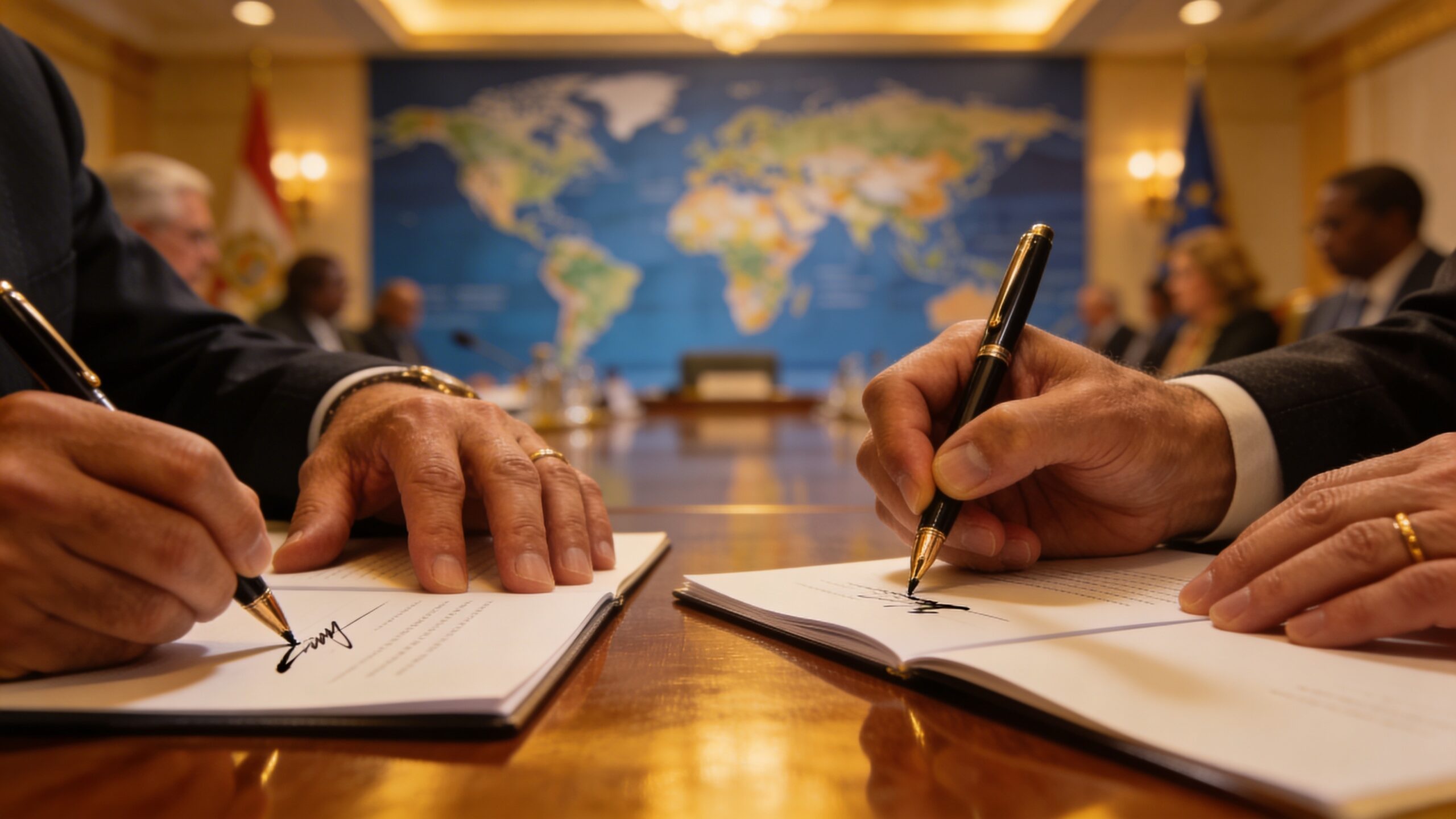
Good treaty analysis avoids assuming that signature equals success. The more important question is whether the agreement changes behavior after ceremonies, speeches, and diplomatic photographs are over.
That practical follow-through is where diplomatic language becomes a real international rule.
Why This Topic Still Matters in Public Life
The clearest way to understand How International Treaties Work: From Negotiation to Enforcement is to ask how the idea changes authority, responsibility, and public expectations. The article’s main themes around International, Treaties, and Work should help a reader see who has authority, what choices are available, and why the outcome matters beyond a headline or campaign phrase.
For How International Treaties Work: From Negotiation to Enforcement, institutional responsibility is the first anchor. The sections on domestic politics, soft law and formal law, and power and trust between states point to the offices, rules, habits, or political pressures that turn an abstract issue into action. That keeps the topic grounded in visible structures instead of leaving it as a broad opinion about public affairs.
The public-facing side of How International Treaties Work: From Negotiation to Enforcement is just as important. For ordinary people, the issue may show up through access, cost, risk, representation, legal duties, public trust, or the ability to challenge a decision. The topic becomes easier to judge when those encounters show what people can ask, challenge, use, support, or oppose.
The tradeoffs in How International Treaties Work: From Negotiation to Enforcement also deserve attention. The topic can involve speed, fairness, cost, liberty, security, representation, expertise, and trust at the same time. Strong public judgment comes from naming those tradeoffs plainly and showing why reasonable people may weigh them differently.
Accountability gives How International Treaties Work: From Negotiation to Enforcement its practical test. The article has to make clear which institution can act, which record can be checked, which promise can be tested, and which remedy exists if the system fails. That review is stronger when it follows the trail from public claim to legal authority, implementation, oversight, and correction. Without that trail, public language can sound impressive while leaving ordinary people unsure where responsibility actually sits.
That is why this topic should be read through consequences as well as definitions. The details in treaties in everyday life and how to evaluate a treaty matter because they show whether the topic affects a narrow procedural question, a durable public rule, or a broader argument about how power should be organized.
People do not need to memorize every technical term in How International Treaties Work: From Negotiation to Enforcement. It is enough to ask what changed, who benefits, who carries the burden, what safeguards exist, and whether the public can review the result. Those questions turn the subject into usable public knowledge.
Viewed that way, How International Treaties Work: From Negotiation to Enforcement becomes less about a single definition and more about responsible public judgment. The point is to understand how decisions are made, how they are limited, and how citizens can recognize whether the system is doing the work it claims to do.
History adds another layer to How International Treaties Work: From Negotiation to Enforcement. The meaning of the topic can change as institutions mature, public expectations shift, and later conflicts reveal weaknesses that were easier to miss at first. Looking at the subject over time helps readers separate temporary controversy from durable change.
Scale changes how How International Treaties Work: From Negotiation to Enforcement works. The closer the subject gets to implementation, the more important it becomes to ask who has the staff, money, and authority to carry it out. A national argument may look simple from a distance, while local offices, courts, schools, agencies, or community groups experience the issue in uneven ways. The closer a reader gets to implementation, the easier it becomes to see why broad promises need practical design.
Language around How International Treaties Work: From Negotiation to Enforcement also has to be tested against action. If leaders describe the issue as reform, protection, freedom, stability, efficiency, or fairness, the next question is how that claim appears in budgets, deadlines, procedures, staff capacity, and public results.
A practical view of How International Treaties Work: From Negotiation to Enforcement leaves room for disagreement without making the subject vague. People may value International, Treaties, and Work differently, but they can still argue from a clearer shared picture of what the institutions are doing and what consequences follow.
The lasting lesson from How International Treaties Work: From Negotiation to Enforcement is that public issues are rarely solved by one speech, one vote, one ruling, or one headline. The topic becomes understandable when people trace the connections among authority, incentives, implementation, oversight, and the people affected by the final decision.
For How International Treaties Work: From Negotiation to Enforcement, the strongest public explanation also keeps the human consequence in view. Institutions matter because they decide who waits, who pays, who receives protection, who gains access, who faces limits, and who has enough information to respond.
The subject also benefits from comparison. Looking at domestic politics beside power and trust between states shows whether the issue is mainly about design, leadership, legal authority, public behavior, or the friction between several forces at once.
That broader frame makes How International Treaties Work: From Negotiation to Enforcement more useful than a stand-alone definition. It gives the topic enough context to support judgment, enough detail to avoid oversimplifying, and enough practical grounding to keep the discussion connected to real public life.
Bottom Line on International Treaties
International treaties turn negotiated promises into written rules between countries.
Their strength depends on clear obligations, domestic implementation, monitoring, dispute procedures, and the political will to keep commitments.