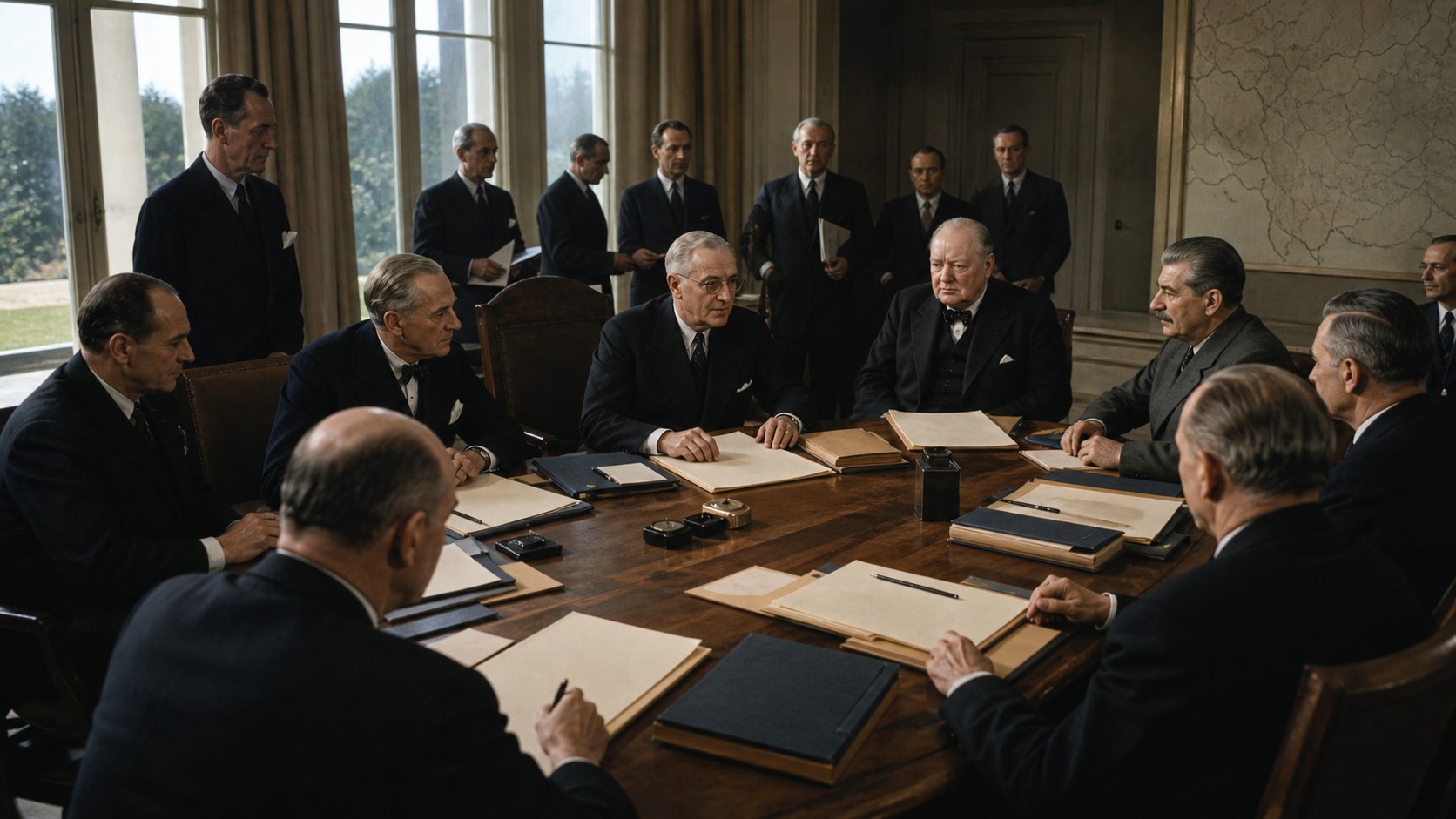
Superpower Rivalries Shape World History by Turning Military, Economic, Ideological, and Technological Competition Global
Superpower rivalries happen when the strongest countries compete for influence across regions, institutions, technologies, alliances, and ideas. These rivalries can organize world politics for decades because other states must decide whether to align, hedge, resist, or exploit the competition. Superpower rivalry is not only about armies. It includes trade, propaganda, space programs, nuclear weapons, intelligence, development aid, cyber tools, energy, and the struggle to define the rules of international order.
A: Public decisions pass through rules, budgets, negotiations, legal review, and implementation limits.
A: No. A law creates authority, while policy includes the plans and actions used to carry it out.
A: Parties organize voters, candidates, agendas, committees, fundraising, and legislative priorities.
A: Yes, especially when it affects elections, coalitions, protests, media attention, or official legitimacy.
A: Courts interpret legal boundaries that shape what officials and agencies can do.
A: Reform has to survive law, funding, administration, opposition, and unintended consequences.
A: History, institutions, party systems, courts, budgets, and public values differ.
A: Ask who has authority, what rule changes, how it is funded, and how results are measured.
A: Local offices often handle services people experience directly, including zoning, schools, roads, and public safety.
A: Transparency, accountability, fair procedure, competent service, and public correction of mistakes.
What Makes a Superpower
A superpower has military reach, economic scale, technological capacity, diplomatic influence, and the ability to affect events far beyond its borders.
Superpowers can project force, support allies, impose sanctions, set standards, shape institutions, and attract or pressure other states.
Superpower status also brings burdens. Global influence requires commitments, spending, credibility, and the ability to manage crises in many places at once.
Rivalry and Security Dilemmas
A security dilemma occurs when one country’s defensive action appears threatening to another. Arms buildups, alliances, missile defenses, and military exercises can all create this problem.
Superpower rivalries intensify security dilemmas because each side interprets the other’s moves through suspicion and worst-case planning.
This can produce escalation even when neither side says it wants direct war.
The Cold War Model
The Cold War between the United States and the Soviet Union became the defining superpower rivalry of the twentieth century.
It involved ideology, nuclear weapons, alliances, proxy wars, espionage, propaganda, space competition, economic models, and global influence.
The rivalry shaped domestic politics around the world because local conflicts were often interpreted through the larger contest.
Proxy Wars
Proxy wars occur when rival powers support opposing sides in another country’s conflict instead of fighting each other directly.
Proxy conflicts can reduce the risk of direct superpower war, but they often devastate the countries where the fighting happens.
They also make local conflicts harder to resolve because outside support can keep armed groups supplied and politically protected.
Nuclear Deterrence
Nuclear weapons changed superpower rivalry by making direct war potentially catastrophic for both sides.
Deterrence depends on the belief that an attack would trigger unacceptable retaliation. That belief can prevent war, but it also creates permanent danger if communication or command systems fail.
Arms control treaties, hotlines, inspections, and crisis diplomacy developed because leaders understood that rivalry needed guardrails.
Economic Competition
Superpowers compete economically through trade, currency influence, industrial policy, development aid, sanctions, resource access, and technology control.
Economic competition can be less violent than military conflict, but it can still reshape countries by affecting jobs, prices, debt, investment, and supply chains.
A rivalry becomes more intense when economic tools are treated as national security weapons.
Technology and Space
Technological competition is central to superpower rivalry. Spaceflight, satellites, computing, semiconductors, artificial intelligence, energy systems, and cyber tools all carry strategic value.
Technology can signal national prestige while also giving practical military and economic advantages.
The race for technological leadership often draws universities, companies, research labs, and supply chains into national strategy.
Allies and Nonaligned States
Superpower rivalries affect countries that are not superpowers. Allies may receive protection, aid, weapons, or market access, but they may also face pressure to support the superpower’s agenda.
Nonaligned or hedging states try to preserve flexibility by working with multiple powers without fully committing to one bloc.
Smaller states can sometimes gain leverage from rivalry, but they can also become arenas where larger powers compete.
Managing Rivalry Without War
The central challenge is managing competition without letting it become direct conflict.
Communication channels, arms control, crisis protocols, trade rules, regional diplomacy, and clear red lines can reduce risk.
Rivalry is dangerous when leaders believe humiliation, domestic weakness, or alliance credibility requires constant escalation.
Ideology and Propaganda
Superpower rivalries often become contests over ideas. Each side tries to present its political and economic model as more legitimate, modern, just, or effective.
Propaganda, cultural exchange, broadcasting, education programs, and diplomatic messaging all become tools of influence.
The ideological struggle matters because allies and publics are more likely to support a superpower when its story feels credible as well as powerful.
Rivalry in the Global South
Many superpower rivalries play out in regions where local actors have their own goals. Countries in Africa, Asia, Latin America, and the Middle East have often used great-power competition to seek aid, weapons, recognition, or development support.
That does not mean local governments are merely pawns. They can bargain, resist, shift partners, or use rivalry to strengthen their own position.
A careful view keeps local agency in the picture instead of treating every conflict as only a reflection of distant capitals.
Economic Decoupling and Dependence
Modern rivalry often includes arguments over whether economies should decouple, diversify, or remain deeply connected.
Decoupling can reduce vulnerability to a rival, but it can also raise costs, disrupt industries, and force allies to choose sides before they are ready.
Dependence is not always weakness, but risky dependence gives another power leverage during crisis. That is why supply chains have become part of national strategy.
The result is that factories, ports, minerals, chips, and shipping lanes become strategic questions, not only business concerns.
How to Read a Superpower Rivalry
Ask what each side wants to protect, what it fears, and which tools it is using: military, economic, diplomatic, technological, or ideological.
Look at allies and affected regions, not only the rival capitals. Much of the impact is felt by countries caught between the larger powers.
Watch for crisis-management channels. Rivalry is less dangerous when competitors can communicate under pressure.
The strongest analysis avoids assuming every move is either harmless or aggressive. Rivalry often depends on how each side interprets the other’s intent.
Why This Topic Still Matters in Public Life
The clearest way to understand The History of Superpower Rivalries and Their Global Impact is to ask how the idea changes authority, responsibility, and public expectations. The article’s main themes around History, Superpower, and Rivalries should help a reader see who has authority, what choices are available, and why the outcome matters beyond a headline or campaign phrase.
For The History of Superpower Rivalries and Their Global Impact, institutional responsibility is the first anchor. The sections on managing rivalry without war, ideology and propaganda, and rivalry in the global south point to the offices, rules, habits, or political pressures that turn an abstract issue into action. That keeps the topic grounded in visible structures instead of leaving it as a broad opinion about public affairs.
The public-facing side of The History of Superpower Rivalries and Their Global Impact is just as important. For ordinary people, the issue may show up through access, cost, risk, representation, legal duties, public trust, or the ability to challenge a decision. The topic becomes easier to judge when those encounters show what people can ask, challenge, use, support, or oppose.
The tradeoffs in The History of Superpower Rivalries and Their Global Impact also deserve attention. The topic can involve speed, fairness, cost, liberty, security, representation, expertise, and trust at the same time. Strong public judgment comes from naming those tradeoffs plainly and showing why reasonable people may weigh them differently.
Accountability gives The History of Superpower Rivalries and Their Global Impact its practical test. The article has to make clear which institution can act, which record can be checked, which promise can be tested, and which remedy exists if the system fails. That review is stronger when it follows the trail from public claim to legal authority, implementation, oversight, and correction. Without that trail, public language can sound impressive while leaving ordinary people unsure where responsibility actually sits.
That is why this topic should be read through consequences as well as definitions. The details in economic decoupling and dependence and how to read a superpower rivalry matter because they show whether the topic affects a narrow procedural question, a durable public rule, or a broader argument about how power should be organized.
People do not need to memorize every technical term in The History of Superpower Rivalries and Their Global Impact. It is enough to ask what changed, who benefits, who carries the burden, what safeguards exist, and whether the public can review the result. Those questions turn the subject into usable public knowledge.
Viewed that way, The History of Superpower Rivalries and Their Global Impact becomes less about a single definition and more about responsible public judgment. The point is to understand how decisions are made, how they are limited, and how citizens can recognize whether the system is doing the work it claims to do.
History adds another layer to The History of Superpower Rivalries and Their Global Impact. The meaning of the topic can change as institutions mature, public expectations shift, and later conflicts reveal weaknesses that were easier to miss at first. Looking at the subject over time helps readers separate temporary controversy from durable change.
Scale changes how The History of Superpower Rivalries and Their Global Impact works. The closer the subject gets to implementation, the more important it becomes to ask who has the staff, money, and authority to carry it out. A national argument may look simple from a distance, while local offices, courts, schools, agencies, or community groups experience the issue in uneven ways. The closer a reader gets to implementation, the easier it becomes to see why broad promises need practical design.
Language around The History of Superpower Rivalries and Their Global Impact also has to be tested against action. If leaders describe the issue as reform, protection, freedom, stability, efficiency, or fairness, the next question is how that claim appears in budgets, deadlines, procedures, staff capacity, and public results.
A practical view of The History of Superpower Rivalries and Their Global Impact leaves room for disagreement without making the subject vague. People may value History, Superpower, and Rivalries differently, but they can still argue from a clearer shared picture of what the institutions are doing and what consequences follow.
The lasting lesson from The History of Superpower Rivalries and Their Global Impact is that public issues are rarely solved by one speech, one vote, one ruling, or one headline. The topic becomes understandable when people trace the connections among authority, incentives, implementation, oversight, and the people affected by the final decision.
For The History of Superpower Rivalries and Their Global Impact, the strongest public explanation also keeps the human consequence in view. Institutions matter because they decide who waits, who pays, who receives protection, who gains access, who faces limits, and who has enough information to respond.
The subject also benefits from comparison. Looking at managing rivalry without war beside rivalry in the global south shows whether the issue is mainly about design, leadership, legal authority, public behavior, or the friction between several forces at once.
That broader frame makes The History of Superpower Rivalries and Their Global Impact more useful than a stand-alone definition. It gives the topic enough context to support judgment, enough detail to avoid oversimplifying, and enough practical grounding to keep the discussion connected to real public life.
Bottom Line on Superpower Rivalries
Superpower rivalries shape world history by turning competition over security, economics, technology, ideology, and influence into global systems.
Their danger lies in escalation, but their direction depends on whether leaders build enough guardrails to compete without catastrophe.