The World’s Most Powerful Countries Shape Global Affairs Through Military, Economic, Diplomatic, and Cultural Influence
Powerful countries shape global affairs because they can influence security, trade, technology, finance, diplomacy, energy, culture, and international rules beyond their own borders. Power is not one thing. A country may have a large military but a fragile economy, a strong economy but limited diplomatic trust, or cultural influence that travels farther than its official policy. Understanding national power requires looking at capacity, alliances, institutions, legitimacy, geography, and the ability to turn resources into results.
A: Public decisions pass through rules, budgets, negotiations, legal review, and implementation limits.
A: No. A law creates authority, while policy includes the plans and actions used to carry it out.
A: Parties organize voters, candidates, agendas, committees, fundraising, and legislative priorities.
A: Yes, especially when it affects elections, coalitions, protests, media attention, or official legitimacy.
A: Courts interpret legal boundaries that shape what officials and agencies can do.
A: Reform has to survive law, funding, administration, opposition, and unintended consequences.
A: History, institutions, party systems, courts, budgets, and public values differ.
A: Ask who has authority, what rule changes, how it is funded, and how results are measured.
A: Local offices often handle services people experience directly, including zoning, schools, roads, and public safety.
A: Transparency, accountability, fair procedure, competent service, and public correction of mistakes.
What Makes a Country Powerful
A powerful country has resources that other governments, companies, and publics must take seriously. Those resources can include military strength, economic scale, technology, population, natural resources, intelligence capacity, diplomatic reach, and control of key trade routes.
Power also depends on whether a country can use those resources effectively. A large budget does not automatically create strategy, and a large population does not automatically create influence.
The strongest states convert resources into action through institutions, leadership, alliances, administrative capacity, and public legitimacy.
Military Power
Military power remains one of the most visible forms of national strength. Armed forces can deter attacks, defend territory, reassure allies, project force, protect sea lanes, and influence negotiations.
Military power includes more than troop numbers. Technology, logistics, training, command systems, intelligence, nuclear weapons, cyber capacity, airlift, naval reach, and defense industry all matter.
The limits are just as important. Military force can defeat an army and still fail to create political stability if the mission, local conditions, or public support are weak.
Economic Power
Economic power gives countries leverage through markets, currency, investment, trade, manufacturing, finance, energy, food, and technological production.
A large economy can attract partners and create dependence. It can also use sanctions, tariffs, loans, aid, export controls, or investment rules to shape other countries’ choices.
Economic influence works best when paired with reliability. Countries and companies prefer partners whose rules, infrastructure, courts, and currency systems can be trusted over time.
Diplomatic Influence
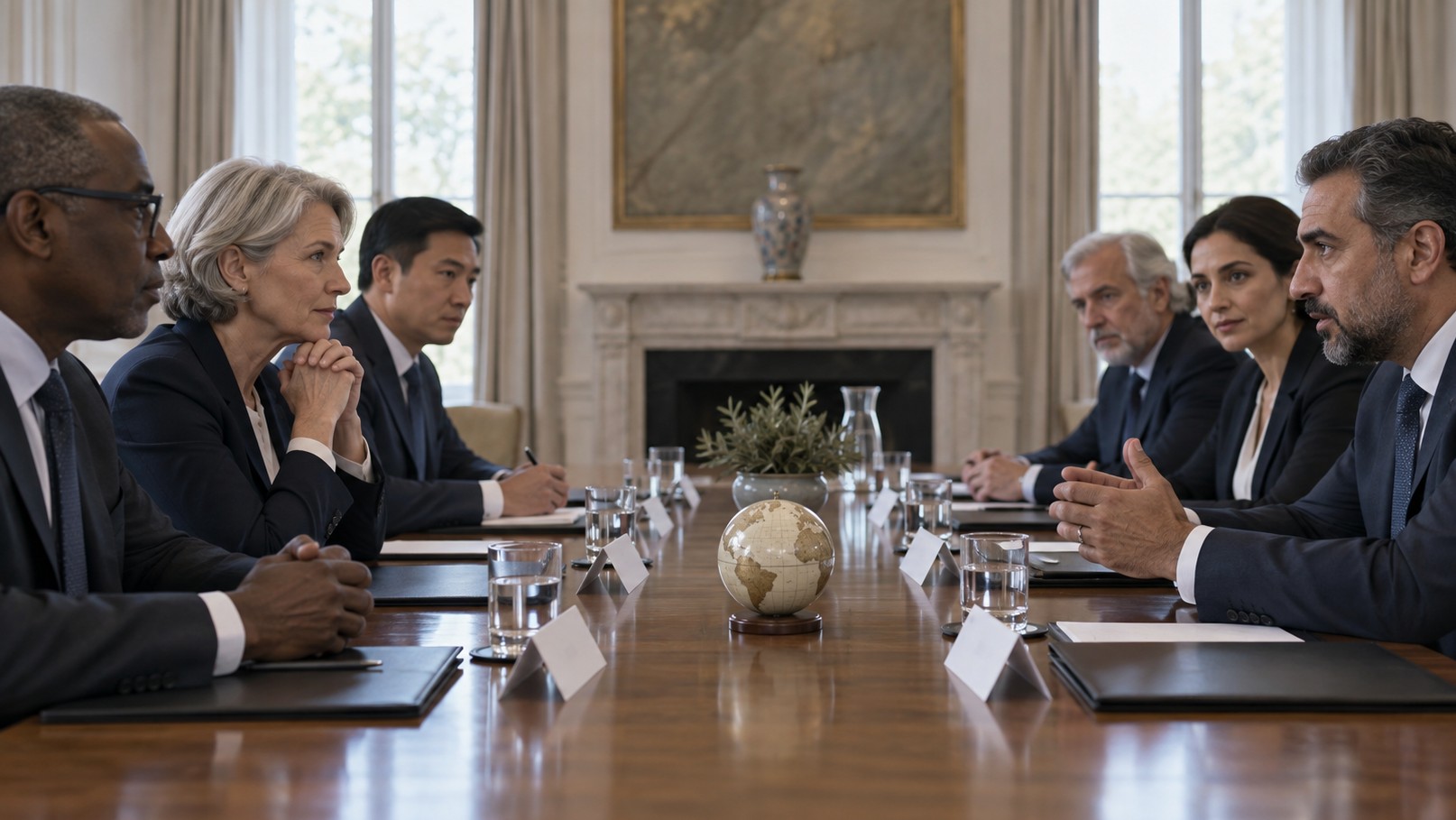
Diplomatic power comes from the ability to build coalitions, negotiate agreements, mediate disputes, lead institutions, and persuade other governments that cooperation is useful.
Embassies, alliances, regional organizations, treaty networks, development programs, and summit diplomacy all extend a country’s reach.
A country with strong diplomacy can sometimes achieve goals without direct coercion. It shapes the room before the public decision is announced.
Technology and Innovation
Technology has become central to national power. Semiconductors, artificial intelligence, satellites, cyber tools, biotechnology, energy systems, and communications networks affect both economic competitiveness and security.
Countries that lead in technology can set standards, attract talent, build advanced industries, and create dependencies that others must consider.
Technology power is fragile if supply chains, education systems, research funding, or intellectual property protections weaken. Innovation requires an ecosystem, not only a headline breakthrough.
Soft Power and Culture
Soft power is the ability to attract rather than coerce. Culture, universities, language, entertainment, values, brands, tourism, science, and public ideals can make a country influential even when formal policy is contested.
Soft power helps a country recruit students, build trust, sell products, form partnerships, and make its political model seem appealing.
It can also be damaged by hypocrisy, repression, corruption, or policies that contradict the values a country claims to represent.
Alliances and Partnerships
Alliances multiply power because countries rarely act alone on major security and economic questions. NATO, regional partnerships, trade blocs, intelligence networks, and bilateral agreements can extend influence.
Alliances require maintenance. Partners need consultation, burden sharing, credible commitments, and confidence that promises will survive leadership changes.
A country with many trusted partners may have more practical power than a country with impressive resources but few allies.
Limits on Great Power
Even powerful countries face limits. Geography, debt, domestic division, demographic pressure, corruption, legitimacy problems, climate risk, and military overextension can reduce influence.
Other states also adapt. Rivals form coalitions, smaller states hedge, markets diversify, and publics resist pressure that appears humiliating.
Power is therefore relational. It depends not only on what a country possesses, but on how others respond to it.
How Power Is Measured
Measuring national power is difficult because different indexes reward different qualities. One ranking may emphasize defense spending, another may emphasize economic output, and another may emphasize innovation or diplomatic networks.
Raw totals can mislead. A country with a huge economy may still face low per-person income, regional inequality, aging infrastructure, or political instability that limits its freedom of action.
A useful measure asks whether a country can achieve goals under pressure. Influence is visible when other governments adjust plans because they expect that country’s support, resistance, market access, or security role to matter.
Domestic Strength Behind Foreign Influence
Foreign influence depends on domestic strength. Education, infrastructure, public health, social trust, energy resilience, manufacturing capacity, legal stability, and fiscal discipline all affect whether a country can sustain global commitments.
A state that looks strong abroad may become less reliable if polarization, corruption, inequality, or institutional decay weakens decision-making at home.
This is why national power should be read from the inside out as well as the outside in. The aircraft carrier, currency, treaty, or technology standard rests on domestic systems that must keep functioning.
How to Compare Powerful Countries
To compare powerful countries, look at military reach, economic scale, technology, alliances, diplomatic credibility, domestic stability, and cultural influence together.
Ask whether the country can turn resources into durable outcomes. A dramatic show of strength may matter less than long-term institutional capacity.
Watch for dependence. A country may be powerful because others depend on its currency, energy, technology, security guarantees, or consumer market.
The clearest analysis avoids ranking countries by one measure and instead asks what kind of power is being used, where, and with what limits.
Why This Topic Still Matters in Public Life
In public life, The World’s Most Powerful Countries and How They Influence Global Affairs matters most when it moves from a label into a chain of real decisions. The article’s main themes around World, Most, and Powerful should help a reader see who has authority, what choices are available, and why the outcome matters beyond a headline or campaign phrase.
For The World’s Most Powerful Countries and How They Influence Global Affairs, institutional responsibility is the first anchor. The sections on alliances and partnerships, limits on great power, and how power is measured point to the offices, rules, habits, or political pressures that turn an abstract issue into action. That keeps the topic grounded in visible structures instead of leaving it as a broad opinion about public affairs.
The public-facing side of The World’s Most Powerful Countries and How They Influence Global Affairs is just as important. A local resident might meet the issue through a vote, public office, agency notice, court dispute, community meeting, budget choice, or service request. The topic becomes easier to judge when those encounters show what people can ask, challenge, use, support, or oppose.
The tradeoffs in The World’s Most Powerful Countries and How They Influence Global Affairs also deserve attention. The topic can involve speed, fairness, cost, liberty, security, representation, expertise, and trust at the same time. Strong public judgment comes from naming those tradeoffs plainly and showing why reasonable people may weigh them differently.
Accountability gives The World’s Most Powerful Countries and How They Influence Global Affairs its practical test. The article has to make clear which institution can act, which record can be checked, which promise can be tested, and which remedy exists if the system fails. That review has to stay close to the public record, because durable trust grows from traceable decisions rather than confident language alone. Without that trail, public language can sound impressive while leaving ordinary people unsure where responsibility actually sits.
That is why this topic should be read through consequences as well as definitions. The details in domestic strength behind foreign influence and how to compare powerful countries matter because they show whether the topic affects a narrow procedural question, a durable public rule, or a broader argument about how power should be organized.
People do not need to memorize every technical term in The World’s Most Powerful Countries and How They Influence Global Affairs. It is enough to ask what changed, who benefits, who carries the burden, what safeguards exist, and whether the public can review the result. Those questions turn the subject into usable public knowledge.
Viewed that way, The World’s Most Powerful Countries and How They Influence Global Affairs becomes less about a single definition and more about responsible public judgment. The point is to understand how decisions are made, how they are limited, and how citizens can recognize whether the system is doing the work it claims to do.
History adds another layer to The World’s Most Powerful Countries and How They Influence Global Affairs. The meaning of the topic can change as institutions mature, public expectations shift, and later conflicts reveal weaknesses that were easier to miss at first. Looking at the subject over time helps readers separate temporary controversy from durable change.
Scale changes how The World’s Most Powerful Countries and How They Influence Global Affairs works. The local version of the issue may reveal delays, costs, or responsibilities that national summaries tend to flatten. A national argument may look simple from a distance, while local offices, courts, schools, agencies, or community groups experience the issue in uneven ways. The closer a reader gets to implementation, the easier it becomes to see why broad promises need practical design.
Language around The World’s Most Powerful Countries and How They Influence Global Affairs also has to be tested against action. If leaders describe the issue as reform, protection, freedom, stability, efficiency, or fairness, the next question is how that claim appears in budgets, deadlines, procedures, staff capacity, and public results.
A practical view of The World’s Most Powerful Countries and How They Influence Global Affairs leaves room for disagreement without making the subject vague. People may value World, Most, and Powerful differently, but they can still argue from a clearer shared picture of what the institutions are doing and what consequences follow.
The lasting lesson from The World’s Most Powerful Countries and How They Influence Global Affairs is that public issues are rarely solved by one speech, one vote, one ruling, or one headline. The topic becomes understandable when people trace the connections among authority, incentives, implementation, oversight, and the people affected by the final decision.
For The World’s Most Powerful Countries and How They Influence Global Affairs, the strongest public explanation also keeps the human consequence in view. Institutions matter because they decide who waits, who pays, who receives protection, who gains access, who faces limits, and who has enough information to respond.
The subject also benefits from comparison. Looking at alliances and partnerships beside how power is measured shows whether the issue is mainly about design, leadership, legal authority, public behavior, or the friction between several forces at once.
That broader frame makes The World’s Most Powerful Countries and How They Influence Global Affairs more useful than a stand-alone definition. It gives the topic enough context to support judgment, enough detail to avoid oversimplifying, and enough practical grounding to keep the discussion connected to real public life.
Bottom Line on Powerful Countries
The world’s most powerful countries shape global affairs through military strength, economic leverage, technology, diplomacy, alliances, and cultural attraction.
Their influence is real but never unlimited, because power must be converted into cooperation, compliance, trust, or results inside a complicated international system.