More Than Landmarks
National monuments hold a unique place in public life because they exist at the crossroads of memory, meaning, and physical space. Some rise dramatically above city skylines. Others stretch across deserts, forests, coastlines, and canyons. Some are built from marble, granite, bronze, or steel. Others are not built at all, existing instead as landscapes protected for their cultural, scientific, historic, or natural significance. What connects them is the simple but powerful idea that certain places deserve to be preserved because they tell an important story. That story is not always easy, simple, or settled. A national monument can honor a leader, safeguard an ancient site, preserve a geological wonder, or mark an event that changed a country. It can represent pride, mourning, struggle, discovery, identity, or aspiration. In every case, it turns memory into place. That is why national monuments still matter today. In a fast-moving world shaped by digital media, shifting politics, and constant reinvention, they offer something rare: a physical reminder that history is not just something people read about. It is something people stand inside, walk through, question, and carry forward.
A: It is a protected place recognized for historic, cultural, scientific, or natural importance.
A: No, they can also include landscapes, archaeological sites, and natural formations.
A: They preserve meaning, memory, and important places for the public and future generations.
A: Presidents can designate them, and Congress can also establish protected sites.
A: Memorials usually honor people or events, while monuments can have broader cultural or natural significance.
A: Yes, public interpretation often evolves as culture and historical understanding change.
A: Yes, many national monuments protect landscapes, fossils, canyons, and ancient terrain.
A: They shape public gathering, reflection, education, and national symbolism.
A: Yes, they provide physical places for history, memory, and shared identity in a fast-moving world.
A: A strong monument combines story, place, design, and emotional meaning in a lasting way.
What a National Monument Actually Is
The phrase “national monument” may sound straightforward, but it covers more than many people realize. In the United States, a national monument is a protected place recognized for its historic, cultural, scientific, or natural importance. That means a national monument might be an ancient archaeological site, a dramatic desert landscape, a fossil-rich region, a historic civic structure, or a location associated with an important chapter in American life.
This broad definition is part of what makes national monuments so compelling. They are not limited to one style, one period, or one purpose. Some are sacred cultural sites connected to Indigenous history. Some protect rare ecosystems or striking geological formations. Some commemorate public ideals or national milestones. The result is a category that reflects the full scale of the American experience, from deep natural time to modern civic memory.
National monuments are often confused with memorials, landmarks, parks, or historic sites. Those categories can overlap, but they are not identical. A memorial usually honors a person or event. A national park typically emphasizes large-scale natural preservation and recreation. A national monument can do some of those things too, but its defining feature is significance rather than a single format. It exists because the place itself carries meaning worth protecting.
How National Monuments Are Created
One reason national monuments matter is that their creation is tied directly to national priorities. In the United States, many national monuments are established under the Antiquities Act, a law that gives presidents the authority to protect significant places. Congress can also create protected sites through legislation. That means the designation of a monument is never random. It reflects a decision that a particular place deserves lasting public recognition and care.
The process matters because it turns values into policy. When a site is designated, it moves from being merely notable to being nationally acknowledged. Protection can preserve fragile ruins, important ecosystems, sacred ground, or spaces that might otherwise be lost to development, neglect, or destruction. A monument designation says that the place belongs not just to the present generation, but also to the future. This is also why national monuments can become part of public debate. Decisions about what to protect reveal what a society values. They raise questions about whose history is being told, which landscapes are worth preserving, and how public memory should be shaped. Rather than making monuments less important, those debates often prove how important they really are.
The Difference Between Monuments and Memorials
People often use the words monument and memorial interchangeably, but they are not exactly the same. A memorial is usually created to honor a person, a group, or an event, often with a strong emotional or commemorative purpose. A monument can honor something too, but it may also preserve a place because of its broader cultural, historical, or scientific significance.
This distinction helps explain why some national monuments feel solemn and reflective while others feel expansive and exploratory. A memorial wall filled with names invites a different kind of experience than a protected canyon with ancient dwellings or a remote volcanic landscape. One may focus attention on remembrance and loss. The other may emphasize continuity, discovery, or preservation. Yet both can carry national meaning.
The overlap between these ideas is part of what makes the category rich. A monument may contain memorial elements. A memorial may become monumental in cultural influence. What matters most is that both transform space into meaning. They give people a place to encounter values, stories, and identities in a form that is both emotional and physical.
Why Physical Places Still Matter in a Digital Age
Modern life often feels increasingly abstract. News, images, arguments, and even historical knowledge move rapidly through screens. In that environment, national monuments offer something grounding. They are physical. They demand presence. They ask people to slow down, look carefully, and experience history not as a stream of information, but as a setting with weight, texture, scale, and atmosphere.
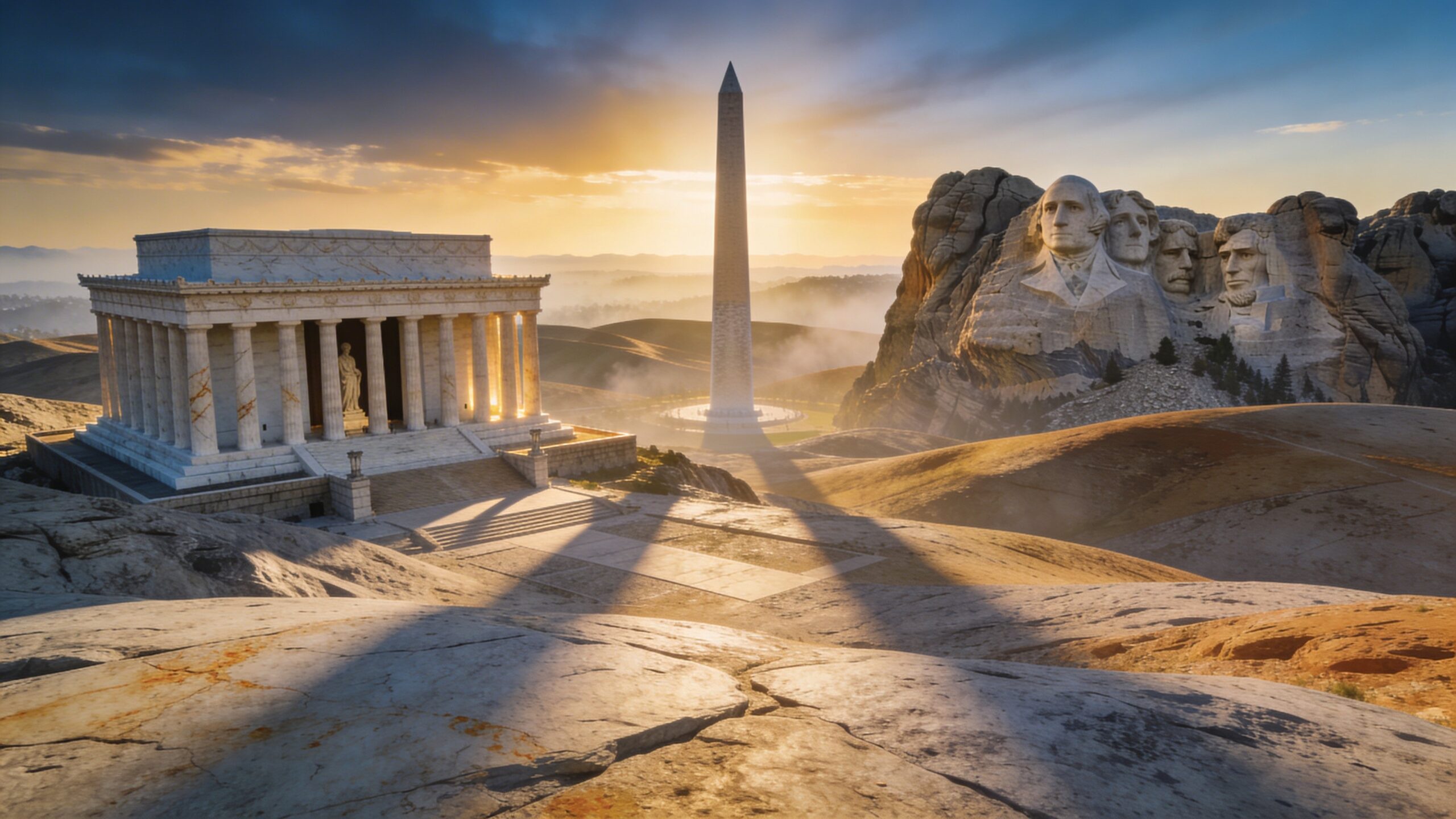
This physical quality changes how people remember. Seeing a monument in person is different from seeing it in a photograph. Scale becomes real. Materials matter. Weather, silence, distance, shadows, and surrounding landscape all shape the encounter. A towering obelisk, a carved cliff face, a solemn wall, or an open civic plaza can create an emotional effect that no summary or image fully captures. That is one reason monuments remain relevant. They resist flattening. They cannot be reduced entirely to captions, clips, or slogans. They create room for reflection. They make it possible to feel the difference between reading about sacrifice and standing in a place built to honor it. In a culture saturated with speed, national monuments restore a sense of depth.
National Monuments as Keepers of Cultural Memory
A society remembers through stories, rituals, institutions, and places. National monuments are among the most visible and enduring of those places. They hold memory in the landscape. They make remembrance public rather than private, shared rather than hidden. They say that certain people, events, places, and ideas are part of a larger national narrative.
This matters because memory is never automatic. Without care, important histories can fade or become distorted. Monuments help prevent that loss by preserving tangible points of reference. They allow people to revisit the past with more than imagination. They provide continuity between generations. A child visiting a monument today may stand in the same place where parents, grandparents, or great-grandparents once stood, encountering the same view while bringing new questions to it.
At their best, national monuments do more than repeat old stories. They deepen them. They encourage people to ask why a place matters, who shaped it, who was excluded from earlier versions of the story, and what new understandings might be possible now. In that way, monuments are not frozen pieces of history. They are active sites of interpretation.
The Power of Natural National Monuments
When many people hear the word monument, they think first of stone buildings, heroic statues, or monumental civic architecture. But some of the most important national monuments are natural places. Towering rock formations, fossil beds, cliff dwellings, ancient forests, volcanic landscapes, and desert ecosystems all fall within the broader idea of a monument when their significance reaches beyond scenery alone.
Natural national monuments matter because they preserve stories written over immense stretches of time. They show geological change, ecological diversity, and human relationships with land across centuries and millennia. In many cases, they also protect places with profound Indigenous cultural importance. These landscapes remind visitors that national meaning is not limited to urban centers or human-made structures. It can also be rooted in terrain, atmosphere, and deep environmental history. They matter today because they connect conservation with identity. Protecting a natural monument is not only about beauty. It is also about stewardship, education, science, and cultural respect. These sites reveal that the American story is not just political or architectural. It is also environmental, ancestral, and spatial.
Monuments and the Question of Identity
National monuments often become symbols because they condense big ideas into visible form. Leadership, freedom, sacrifice, resilience, discovery, unity, grief, democracy, and justice can all be represented through structure, material, scale, and setting. That symbolic power helps explain why monuments often become part of how a nation sees itself.
At the same time, identity is never fixed, and neither is the meaning of a monument. A site that once seemed to communicate a clear story may later be viewed through a more complicated lens. New generations bring new questions. Public values shift. Historical scholarship expands. Communities ask who is represented, who is missing, and what kind of national identity a monument reinforces.
This is not a sign that monuments have failed. It is a sign that they remain alive in public thought. A monument that provokes reflection, disagreement, or reinterpretation is still doing cultural work. It is still participating in the process by which a society understands itself. That continuing relevance is one of the strongest arguments for why monuments still matter.
Why Monuments Shape Civic Space
National monuments are not just symbols placed in isolation. They often shape the structure of public space around them. In cities, they anchor plazas, parks, avenues, and civic sightlines. In natural settings, they help define how people move through and understand a landscape. In both cases, they influence experience through design.
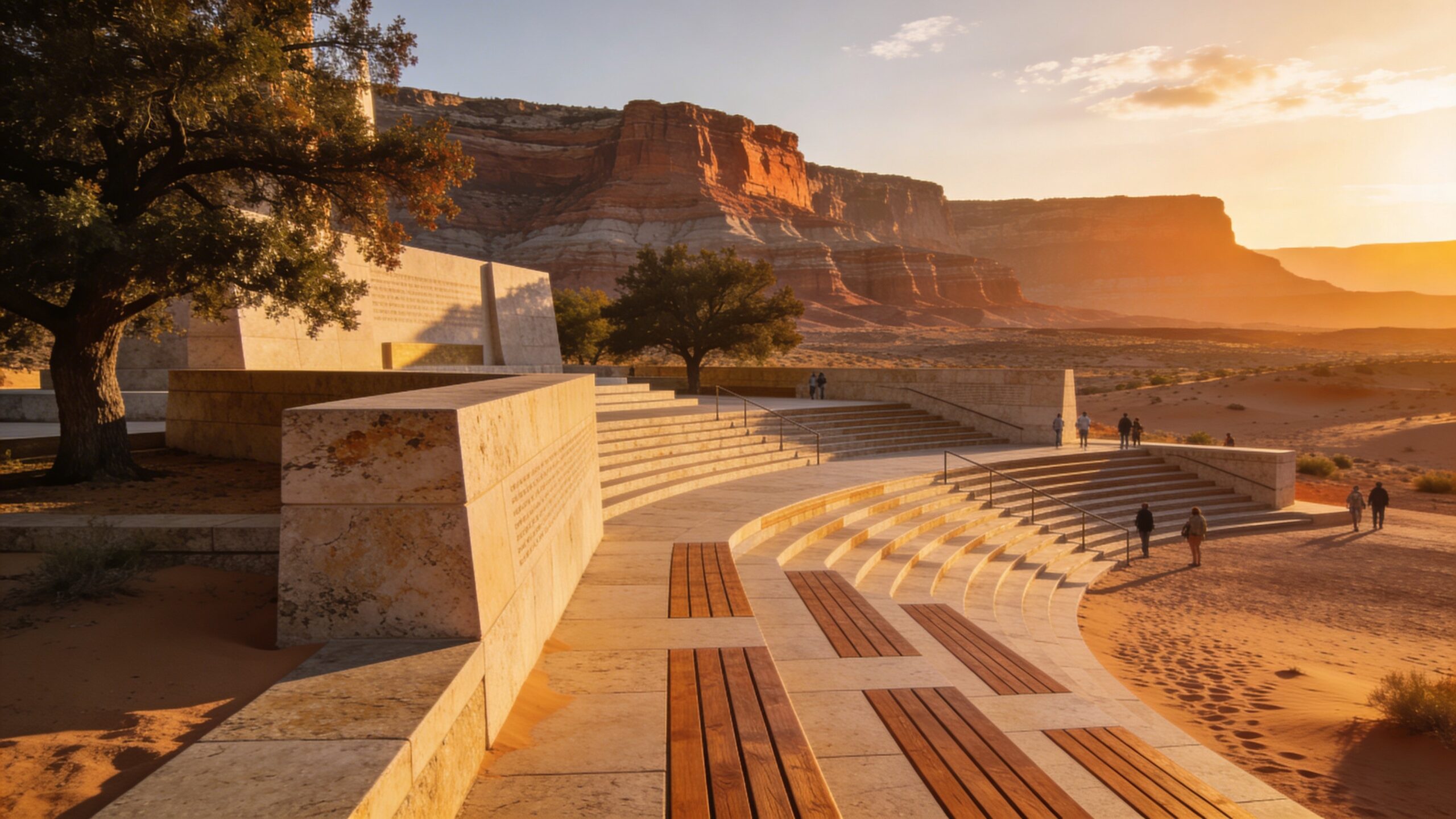
This matters because public space is one of the clearest expressions of shared values. A monument can create a place for gathering, ceremony, protest, contemplation, education, or tourism. It can become a focal point for national holidays, community rituals, and public memory. It can also transform an otherwise ordinary setting into a place of significance. The design of civic space affects how people feel within it. Wide steps can invite assembly. Reflecting pools can create stillness. Walls can narrow attention. Open landscapes can inspire wonder. Monument designers understand this. They shape movement and atmosphere as carefully as they shape the object itself. That is why a great monument is never just something to look at. It is something to experience.
Controversy, Reinterpretation, and Public Debate
Not every monument is embraced in the same way by every generation. Some become the center of intense debate. Questions arise about historical context, representation, ownership, and meaning. Some monuments are reinterpreted through new signage, educational framing, or public discussion. Others become symbols of unresolved tensions in national life.
These debates can be uncomfortable, but they also reveal the continuing power of monuments. No one argues passionately over places that feel meaningless. When people fight over a monument’s future, they are often really debating larger questions about history, justice, and belonging. They are asking what should be honored, how truth should be told, and what kind of public memory a democratic society should create.
This is one reason monuments matter today more than ever. They are not just reflections of the past. They are arenas in which the present negotiates with the past. They force public conversation about memory in a visible, unavoidable way. That can be difficult, but it is also valuable.
Education, Tourism, and Public Understanding
National monuments also matter because they teach. They make history, culture, science, and geography accessible through direct experience. A textbook can describe a battle, a leader, a canyon, or an ancient community. A monument allows people to encounter the scale, setting, and emotional reality surrounding that subject.
This educational power extends beyond formal learning. Families, travelers, students, photographers, historians, and casual visitors all interact with monuments in different ways. Tourism can bring economic energy to surrounding communities, but it also spreads awareness. People often leave a monument with more than photographs. They leave with a changed understanding of the place and, sometimes, of themselves. Because monuments are public-facing and often visually unforgettable, they can reach people who might never seek out the same information elsewhere. They turn education into experience. That alone makes them powerful tools for cultural continuity.
Why National Monuments Matter Today
National monuments matter today because they hold together things modern life often pulls apart. They connect story to place, memory to landscape, design to identity, and history to public life. They preserve what cannot easily be rebuilt once lost. They provide common reference points in a fragmented culture. They offer places where private emotion and collective meaning can meet.
They also matter because the questions they raise are still current. What should be protected? Whose stories should be honored? How should a nation represent itself? How can preservation and change coexist? National monuments do not answer these questions once and for all. Instead, they keep those questions visible.
That may be their greatest strength. A monument is not valuable only because it commemorates something already agreed upon. It is valuable because it keeps a conversation alive across generations. It reminds people that identity is built not only through what is celebrated, but also through what is examined, preserved, and passed on.
Places That Keep the Nation in Conversation With Itself
National monuments are among the most powerful expressions of public meaning in the United States. They stand at the meeting point of landscape, memory, design, and national identity. Some inspire awe. Some invite silence. Some protect fragile stories or ancient terrain. Some stir debate about how history should be understood. All of them matter because they turn values into place.
In a changing world, that role becomes even more important. National monuments give people something durable to return to. They preserve more than land or architecture. They preserve attention. They preserve continuity. They preserve the possibility that a nation can remain in conversation with its own past while still shaping its future. That is why national monuments are not just important relics from another time. They are living parts of public life, and they continue to matter because the stories they hold are still unfolding.