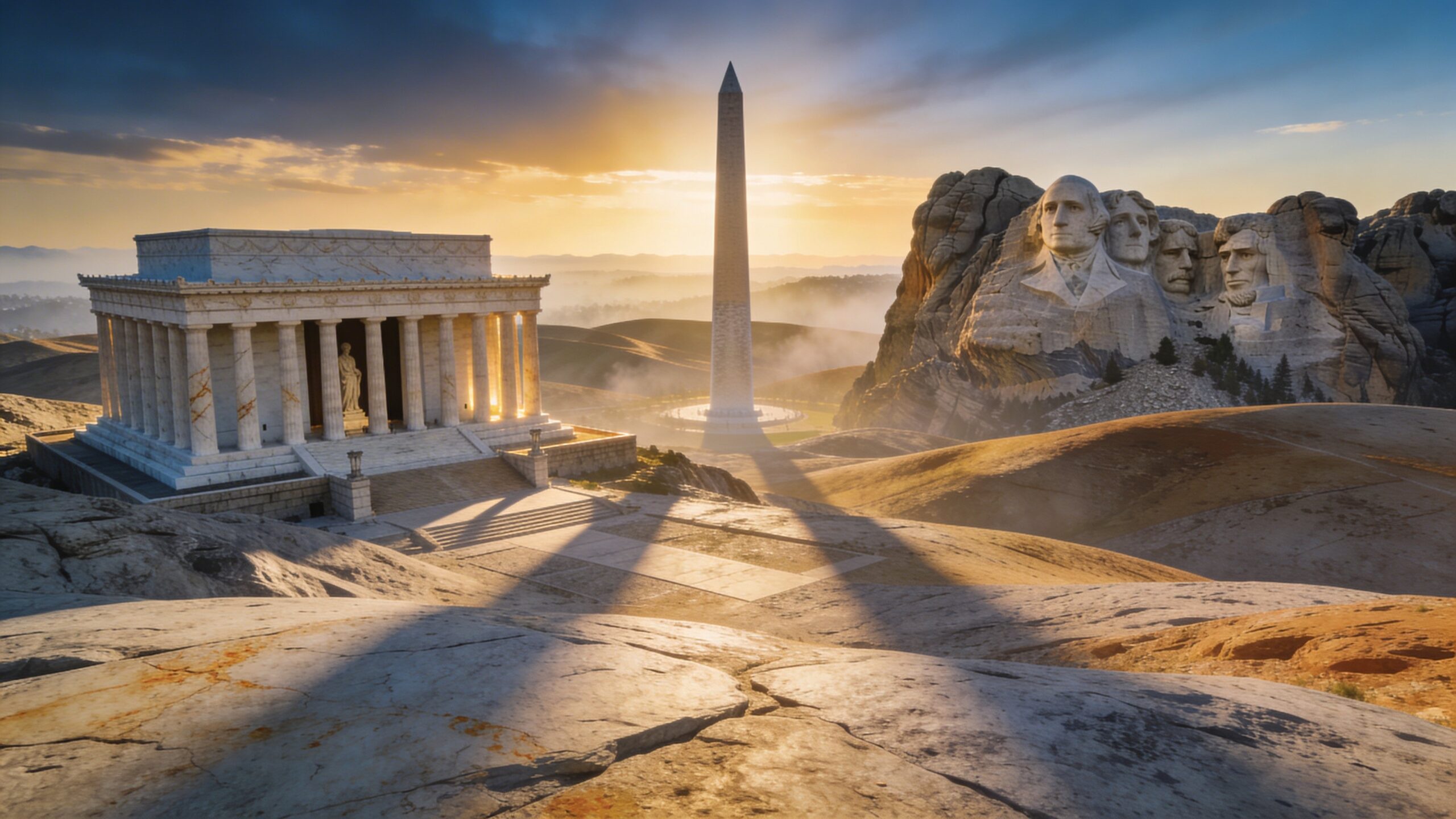
National Monuments Tell Public Stories Through Place, Memory, Architecture, and Civic Meaning
National monuments are public sites created to remember people, events, ideals, sacrifices, landscapes, or turning points in a country's history. They may be statues, memorials, buildings, battlefields, parks, preserved landscapes, or symbolic structures. Monuments matter because they shape public memory. They tell citizens what a nation chooses to honor, mourn, preserve, or debate. A monument is never only stone or bronze; it is a public argument about meaning.
A: Public decisions pass through rules, budgets, negotiations, legal review, and implementation limits.
A: No. A law creates authority, while policy includes the plans and actions used to carry it out.
A: Parties organize voters, candidates, agendas, committees, fundraising, and legislative priorities.
A: Yes, especially when it affects elections, coalitions, protests, media attention, or official legitimacy.
A: Courts interpret legal boundaries that shape what officials and agencies can do.
A: Reform has to survive law, funding, administration, opposition, and unintended consequences.
A: History, institutions, party systems, courts, budgets, and public values differ.
A: Ask who has authority, what rule changes, how it is funded, and how results are measured.
A: Local offices often handle services people experience directly, including zoning, schools, roads, and public safety.
A: Transparency, accountability, fair procedure, competent service, and public correction of mistakes.
What National Monuments Do
National monuments give physical form to memory. They turn history into a place people can visit, photograph, study, and experience together.
They can honor sacrifice, celebrate leadership, preserve natural landscapes, or mark injustice.
Their civic role depends on interpretation. A monument without context can become scenery, while a monument with strong public education can deepen historical understanding.
Memorials and Mourning
Some monuments are built to mourn loss: wars, attacks, disasters, oppression, or public tragedy.
These sites often use names, silence, water, empty space, or symbolic design to create reflection rather than triumph.
A strong memorial respects grief while helping later generations understand why the loss matters.
Heroic Monuments
Heroic monuments honor leaders, soldiers, reformers, founders, or cultural figures.
They can inspire public service, but they can also simplify complicated lives into a single image.
Good interpretation helps visitors see achievement and contradiction together instead of turning people into flawless symbols.
Battlefields and Historic Sites
Battlefields preserve places where conflict changed political history. They help visitors understand geography, strategy, sacrifice, and consequence.
Historic sites can also show how ordinary buildings, roads, schools, or courthouses became important through events that happened there.
Place matters because history feels different when people stand where decisions, violence, protest, or courage occurred.
Natural Monuments
Some national monuments protect landscapes, geological features, ecosystems, or culturally significant lands.
These sites connect public memory to conservation, Indigenous history, recreation, science, and national identity.
Debates over natural monuments often involve land use, local economies, tribal sovereignty, federal authority, and environmental protection.
Design and Symbolism
Monument design uses scale, materials, inscriptions, pathways, light, water, landscape, and orientation to shape emotion.
A towering column communicates differently from a low wall of names or a preserved room.
Design choices are political because they guide how visitors feel and what parts of the story receive emphasis.
Controversy and Removal
Monuments can become controversial when public values change or when citizens question whom the monument honors.
Removal, relocation, reinterpretation, or added context may become public debates over history, identity, and power.
The question is not whether history should be remembered. It is how public honor should work when a monument celebrates a harmful cause or incomplete story.
Education and Interpretation
Museums, plaques, ranger talks, school materials, websites, and public programming help monuments teach rather than merely display.
Interpretation can include multiple perspectives, including people who were excluded from the original public story.
A monument becomes stronger when it invites understanding rather than only passive admiration.
Stewardship and Maintenance
National monuments require maintenance, security, accessibility planning, preservation work, visitor management, and long-term funding.
A neglected monument can send the message that the public memory attached to it is no longer valued.
Stewardship also includes protecting landscapes, artifacts, archives, inscriptions, and visitor safety without turning the site into a sterile display.
Who Gets Remembered
Public monuments reveal whose stories received space, money, and official attention at a particular moment.
The absence of some communities can be as important as the figures or events that appear in stone, bronze, names, or protected land.
A thoughtful visitor asks not only what is present, but what had to happen before that story became visible in public space.
Changing Meaning Over Time
A monument may mean one thing when it is built and another thing decades later.
New scholarship, demographic change, public debate, and political conflict can all alter how citizens understand the site.
That does not make monuments useless. It makes them active civic texts that need interpretation, context, and sometimes revision.
Visitor Experience
The meaning of a monument is shaped by how people move through it. Paths, overlooks, quiet rooms, gathering areas, inscriptions, and maps guide what visitors notice first.
Crowds, security barriers, ceremonies, school trips, protests, and personal grief can all change the tone of the same public site.
A strong monument gives visitors enough structure to understand the subject while leaving room for reflection rather than forcing a single emotional response.
Local and National Memory
Some monuments speak mainly to a local community, while others become national symbols that attract visitors from across the country or the world.
Local memory can be more detailed, personal, and contested because nearby residents live with the site every day.
National memory can be broader but sometimes smoother, leaving out local conflict, ordinary labor, or painful details that make the history more complete.
How to Read a National Monument
Ask who created it, when it was created, who funded it, what story it tells, and what story it leaves out.
Look at design choices. Size, location, inscriptions, and materials all carry meaning.
Consider whether the site honors, mourns, preserves, teaches, or argues.
The best monument reading treats public memory as something built and debated, not simply inherited.
Pay attention to the surrounding space as well as the central object. A monument placed beside a government building, battlefield, cemetery, park, or busy street asks visitors to connect memory with a different kind of public life.
A careful interpretation does not require every visitor to feel the same emotion. It asks whether the site gives enough context for respect, questioning, learning, and honest civic conversation.
That context is what turns a landmark from scenery into a serious public lesson.
Why This Topic Still Matters in Public Life
In public life, The Most Famous National Monuments in the United States Explained matters most when it moves from a label into a chain of real decisions. The article’s main themes around Most, Famous, and National should help a reader see who has authority, what choices are available, and why the outcome matters beyond a headline or campaign phrase.
For The Most Famous National Monuments in the United States Explained, institutional responsibility is the first anchor. The sections on who gets remembered, changing meaning over time, and visitor experience point to the offices, rules, habits, or political pressures that turn an abstract issue into action. That keeps the topic grounded in visible structures instead of leaving it as a broad opinion about public affairs.
The public-facing side of The Most Famous National Monuments in the United States Explained is just as important. A local resident might meet the issue through a vote, public office, agency notice, court dispute, community meeting, budget choice, or service request. The topic becomes easier to judge when those encounters show what people can ask, challenge, use, support, or oppose.
The tradeoffs in The Most Famous National Monuments in the United States Explained also deserve attention. The topic can involve speed, fairness, cost, liberty, security, representation, expertise, and trust at the same time. Strong public judgment comes from naming those tradeoffs plainly and showing why reasonable people may weigh them differently.
Accountability gives The Most Famous National Monuments in the United States Explained its practical test. The article has to make clear which institution can act, which record can be checked, which promise can be tested, and which remedy exists if the system fails. That review has to stay close to the public record, because durable trust grows from traceable decisions rather than confident language alone. Without that trail, public language can sound impressive while leaving ordinary people unsure where responsibility actually sits.
That is why this topic should be read through consequences as well as definitions. The details in local and national memory and how to read a national monument matter because they show whether the topic affects a narrow procedural question, a durable public rule, or a broader argument about how power should be organized.
People do not need to memorize every technical term in The Most Famous National Monuments in the United States Explained. It is enough to ask what changed, who benefits, who carries the burden, what safeguards exist, and whether the public can review the result. Those questions turn the subject into usable public knowledge.
Viewed that way, The Most Famous National Monuments in the United States Explained becomes less about a single definition and more about responsible public judgment. The point is to understand how decisions are made, how they are limited, and how citizens can recognize whether the system is doing the work it claims to do.
History adds another layer to The Most Famous National Monuments in the United States Explained. The meaning of the topic can change as institutions mature, public expectations shift, and later conflicts reveal weaknesses that were easier to miss at first. Looking at the subject over time helps readers separate temporary controversy from durable change.
Scale changes how The Most Famous National Monuments in the United States Explained works. The local version of the issue may reveal delays, costs, or responsibilities that national summaries tend to flatten. A national argument may look simple from a distance, while local offices, courts, schools, agencies, or community groups experience the issue in uneven ways. The closer a reader gets to implementation, the easier it becomes to see why broad promises need practical design.
Language around The Most Famous National Monuments in the United States Explained also has to be tested against action. If leaders describe the issue as reform, protection, freedom, stability, efficiency, or fairness, the next question is how that claim appears in budgets, deadlines, procedures, staff capacity, and public results.
A practical view of The Most Famous National Monuments in the United States Explained leaves room for disagreement without making the subject vague. People may value Most, Famous, and National differently, but they can still argue from a clearer shared picture of what the institutions are doing and what consequences follow.
The lasting lesson from The Most Famous National Monuments in the United States Explained is that public issues are rarely solved by one speech, one vote, one ruling, or one headline. The topic becomes understandable when people trace the connections among authority, incentives, implementation, oversight, and the people affected by the final decision.
For The Most Famous National Monuments in the United States Explained, the strongest public explanation also keeps the human consequence in view. Institutions matter because they decide who waits, who pays, who receives protection, who gains access, who faces limits, and who has enough information to respond.
The subject also benefits from comparison. Looking at who gets remembered beside visitor experience shows whether the issue is mainly about design, leadership, legal authority, public behavior, or the friction between several forces at once.
That broader frame makes The Most Famous National Monuments in the United States Explained more useful than a stand-alone definition. It gives the topic enough context to support judgment, enough detail to avoid oversimplifying, and enough practical grounding to keep the discussion connected to real public life.
Bottom Line on National Monuments
National monuments tell public stories through place, design, memory, and civic meaning.
They are most valuable when they help citizens understand history honestly, including achievement, loss, conflict, and unfinished responsibility.